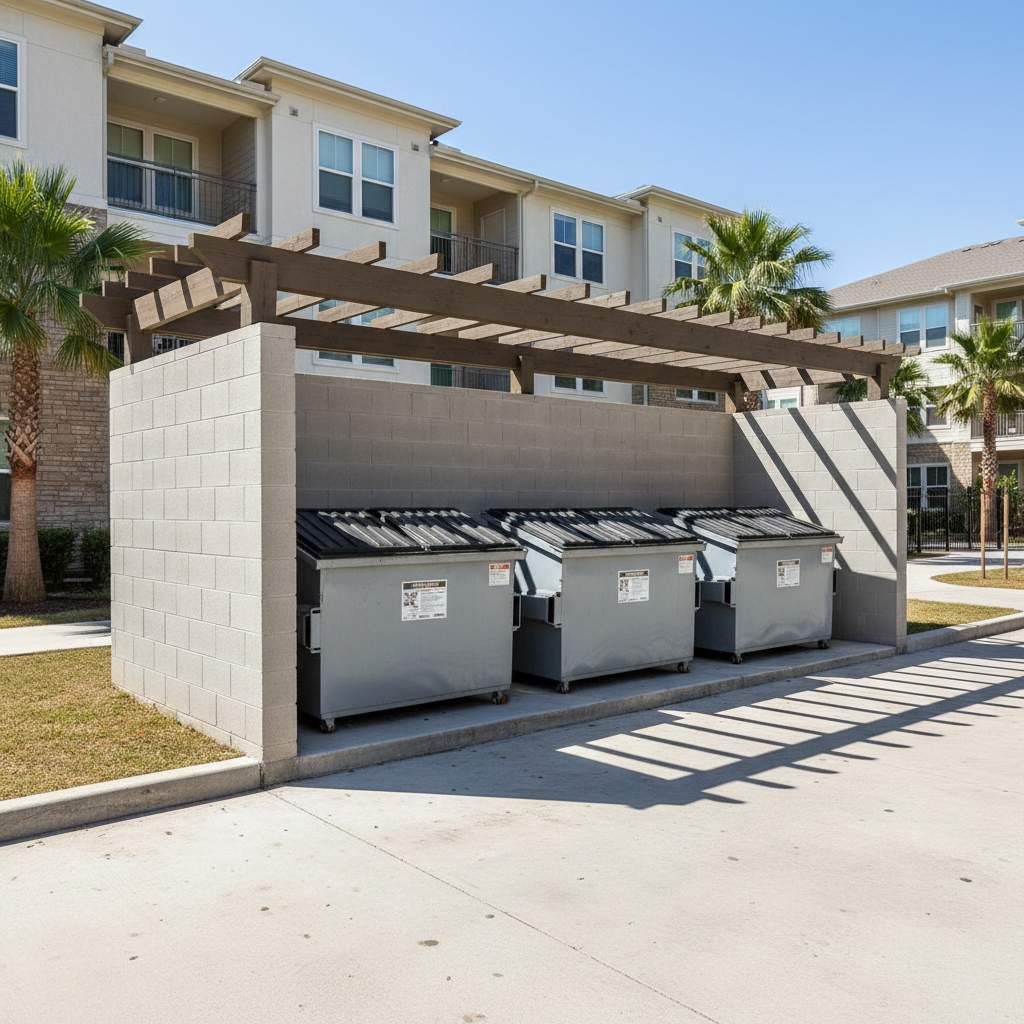
Apartment Complex Waste Removal Solutions: A TX PM's Guide
A Texas operator's guide to apartment complex waste removal solutions. We dissect hauler contracts, valet trash ROI, and ancillary services to boost NOI and property cleanliness.
Effective apartment complex waste removal solutions in Texas combine optimized hauler contracts with ancillary services like valet trash and bulk item removal. This blended approach controls costs, boosts Net Operating Income (NOI), and enhances resident satisfaction by maintaining a clean, compliant property across major TX markets.
TL;DR:
- A blended waste management strategy, combining a right-sized hauler contract with on-site services, is the most effective approach for Texas multifamily properties.
- Valet trash is not a cost center; it is a significant NOI driver, typically generating $15-$20 per unit in monthly profit and increasing asset value.
- Regular, data-driven audits of waste streams, hauler invoices, and service levels are critical for cost control and operational efficiency.
Understanding Your Core Waste Hauler Contract
This is the foundational agreement with a municipal or private hauler that provides and services your property's dumpsters or compactors. Optimizing this contract is the single biggest lever for controlling baseline waste expenses. Most properties in Texas are over-serviced, paying for pickups or container capacity they don't consistently need.
Your hauler contract dictates the number of containers, their size (in cubic yards), and the frequency of pickups (the "pull schedule"). In dense markets like Dallas-Fort Worth or Houston, haulers often default to a high-frequency schedule to maximize their route efficiency, not your budget. A thorough waste services audit is the first step to right-sizing your core service and cutting unnecessary costs.
Key Contract Terms to Scrutinize
- Service Level: Are you paying for five pulls a week when your dumpsters are only 60% full on pickup day? Documenting this with photos provides leverage for schedule reduction.
- Ancillary Fees: Look for fuel surcharges, environmental fees, and container rental fees. These are often negotiable or can be benchmarked against competitors.
- Contamination Charges: Especially prevalent in cities with strong recycling programs like Austin, these fines result from residents improperly sorting waste. A clear resident education program and services like valet trash can mitigate these costs.
- Auto-Renewal Clauses: Many contracts contain "evergreen" clauses that auto-renew for multi-year terms unless you provide notice within a very specific window (e.g., 90-180 days before expiry). Miss this window, and you're locked in. Track these dates religiously.
The Blended Solution: A Modern Framework for Waste Management
A blended model treats waste management not as a single line item, but as an integrated system with multiple components working together. This is the standard for Class A and B properties and is a core tenet of modern property management best practices. It layers specialized services on top of a lean, optimized hauler contract.
The goal is to shift from a purely expense-based mindset to a model that controls costs, improves property aesthetics, and generates ancillary income. This framework consists of three layers: Hauler Management, On-Site Solutions, and Ancillary Services.
Layer 1: Right-Sized Hauler Contract
As established, this is your baseline. After a thorough audit, your hauler contract should be lean. The goal is to pay only for the absolute necessary capacity and pickup frequency. This might mean reducing pulls from five days a week to three, or swapping an 8-yard dumpster for a 6-yard one. This cost-cutting at the base layer creates the budget and operational justification for Layer 2.
Layer 2: On-Site Solutions (Valet Trash)
This is the most impactful layer for both resident experience and your pro forma. Valet trash service, where a vendor collects trash directly from residents' doors on a set schedule (typically 5 nights a week), fundamentally changes the property's waste dynamics. For an in-depth operational look, see our operator's guide to valet trash service.
By intercepting household trash before it ever goes to the central dumpsters, valet trash allows for a significant reduction in central container needs. The foul odors, overflowing bins, and unsightly "trash mountains" are drastically reduced. This directly enables the cost savings in Layer 1. More importantly, it creates a new, high-margin revenue stream.
Layer 3: Ancillary & Bulk Services
This layer addresses everything else that falls outside daily household waste. This includes bulk item removal (old furniture, mattresses), move-out junk removal, and managing overflow during peak seasons. Having a dedicated solution prevents your maintenance team from spending hours hauling couches to the dumpster area, only to have the hauler refuse pickup or charge exorbitant fees.
Valet Trash: The NOI-Generating Machine
Property managers must view valet trash not as an expense, but as a crucial ancillary income source. The financial model is straightforward and powerful, directly benefiting property managers by boosting key performance metrics. This service is mandatory at nearly all new Class A developments in Austin, Dallas, and Houston for a reason.
Here’s how the math works. A valet trash provider charges the property a wholesale rate, typically $8–$11 per door, per month in Texas. The property then charges residents a mandatory monthly fee of $20–$30 for the amenity. The spread between the resident fee and the vendor cost is pure profit.
ROI Calculation: A 300-Unit Example
Let's model this for a typical 300-unit Class B property in a San Antonio submarket.
-
Vendor Cost: The property signs a contract with a provider like Abfall Valet for $10 per unit per month.
- Monthly Vendor Expense: 300 units * $10/unit = $3,000
-
Resident Ancillary Fee: The property adds a $25 per month "Trash Valet Fee" to each lease.
- Monthly Ancillary Revenue: 300 units * $25/unit = $7,500
-
Calculate Monthly Net Profit:
- Monthly Profit: $7,500 (Revenue) - $3,000 (Expense) = $4,500
-
Calculate Annual NOI Increase:
- Annual NOI Increase: $4,500/month * 12 months = $54,000
-
Calculate Increase in Asset Value:
- Assuming a market cap rate of 5.0%, the impact on the property's valuation is substantial.
- Increase in Value: $54,000 (Annual NOI) / 0.05 (Cap Rate) = $1,080,000
Implementing valet trash added over $1 million to the asset's value, all while improving curb appeal, resident satisfaction, and freeing up maintenance staff from trash-related tasks. This is a clear example of how valet trash benefits property managers on a financial level.
Waste Solutions Comparison for TX Properties
To make an informed decision, operators must weigh the costs and benefits of different apartment complex waste removal solutions. The table below provides a clear, operator-focused comparison.
| Solution Component | Typical Cost Structure | NOI Impact | Resident Experience | PM Operational Lift |
|---|---|---|---|---|
| Traditional Hauler | Monthly Fee ($500-$5k+) | Negative (Expense Only) | Poor (Unsightly, odorous dumpsters) | High (Manages overflows, complaints) |
| Valet Trash Service | $8-$11/unit/month vendor cost | Highly Positive (+$15-20/unit profit) | Excellent (Convenient, clean) | Low (Vendor manages service, reporting) |
| Bulk Item Removal | Per-Item or Subscription Fee | Neutral (Cost offset by fines avoidance) | Positive (Clear, easy disposal option) | Medium (Coordinates pickups) |
| Waste Consulting/Broker | % of Savings or Monthly Fee | Positive (Reduces hauler costs) | Neutral | Low (Broker handles hauler negotiation) |
Texas Market-Specific Waste Challenges & Solutions
While the blended framework is universal, its application varies across Texas's major multifamily markets.
Dallas-Fort Worth (DFW)
The DFW market is characterized by urban sprawl and a mix of city-run and private waste hauling. In Dallas, properties often contend with strict recycling ordinances and associated contamination fines. A key solution here is a robust valet trash program that includes sorted recycling collection at the door, which dramatically improves compliance.
Houston
Houston's humidity and propensity for heavy rain create significant challenges for open-top dumpsters. They quickly fill with water, increasing weight and leading to higher hauling fees (wet waste is heavier). Compactors are a popular but capital-intensive solution. A more immediate solution is ensuring all dumpsters have functional, closed lids and training maintenance staff to keep them closed. Valet trash also helps by reducing the frequency of residents visiting the dumpster area, leaving lids open.
Austin
Austin leads Texas in environmental regulations, with "Universal Recycling Ordinance" (URO) requirements for multifamily properties. This mandates convenient access to recycling for residents. Failure to comply leads to significant fines. Valet trash services that include a separate recycling container are not just an amenity in Austin; they are a compliance tool. They provide the most convenient way for residents to recycle correctly, protecting the property from city penalties.
San Antonio
San Antonio features a mix of older-stock properties and new developments. For garden-style communities, the long distances from apartments to dumpsters make illegal dumping of household trash bags near buildings a common problem. Valet trash directly solves this by providing door-to-door collection, eliminating the resident's need to transport trash across the property. This single change cleans up building exteriors and breezeways almost overnight.
Frequently Asked Questions
How do I switch waste haulers in Texas?
Most haulers require a 90-180 day written notice to terminate a contract before its renewal date. The first step is to locate your current contract and identify the renewal and notification terms. If you're locked in, a waste consultant can sometimes negotiate a buyout or find service errors that void the contract. A full apartment complex trash pickup guide can walk you through the specifics of evaluation.
Is valet trash actually profitable for the property?
Yes, highly profitable. As demonstrated in the ROI calculation, valet trash is designed as an ancillary income program. With a typical spread of $15-$20 per unit per month between the resident fee and the vendor cost, it generates significant, high-margin recurring revenue that flows directly to NOI.
What are common hidden fees in waste contracts?
Look for fuel surcharges, environmental fees, regulatory cost recovery, container rental/delivery fees, and lock bar fees. Also, be wary of overage charges for overflowing dumpsters and contamination fees for improper recycling. These fees can often add 20-30% to your base service cost if not managed.
How should my property handle bulk item disposal?
Establish a clear policy and a designated solution. Options include: 1) Partnering with a valet trash vendor that offers on-demand bulk pickup. 2) Scheduling a periodic "bulk day" with your hauler or a third-party junk removal service. 3) Providing residents with clear information on local municipal bulk pickup options. This prevents illegal dumping on-site.
How often should we conduct a waste audit?
A comprehensive waste audit should be conducted annually, typically 6-8 months before your hauler contract renewal date. This gives you ample time to collect data and negotiate terms from a position of strength. A mini-audit or invoice review should be done quarterly to catch any new fees or billing errors.
Ready to upgrade your trash valet program?
Discuss your property-specific scope and quote with our team.
Related reading
A PM's Guide to Improving Multifamily Resident Experience
Elevate your Texas apartment community by focusing on three core pillars: operational excellence, high-touch communication, and premium amenities. Learn how to boost resident satisfaction and retention.
11 Cost-Saving Strategies for Apartment Complexes in Texas
Discover 11 operator-grade cost-saving strategies for apartment complexes in Texas. Cut utility expenses, optimize vendor contracts, and boost your Net Operating Income (NOI) with actionable frameworks for PMs.
5 Cost-Saving Strategies for Multifamily Communities in TX
Practical cost-saving strategies for Texas multifamily communities that boost NOI. Learn to cut utility, maintenance, and vendor expenses without sacrificing quality.