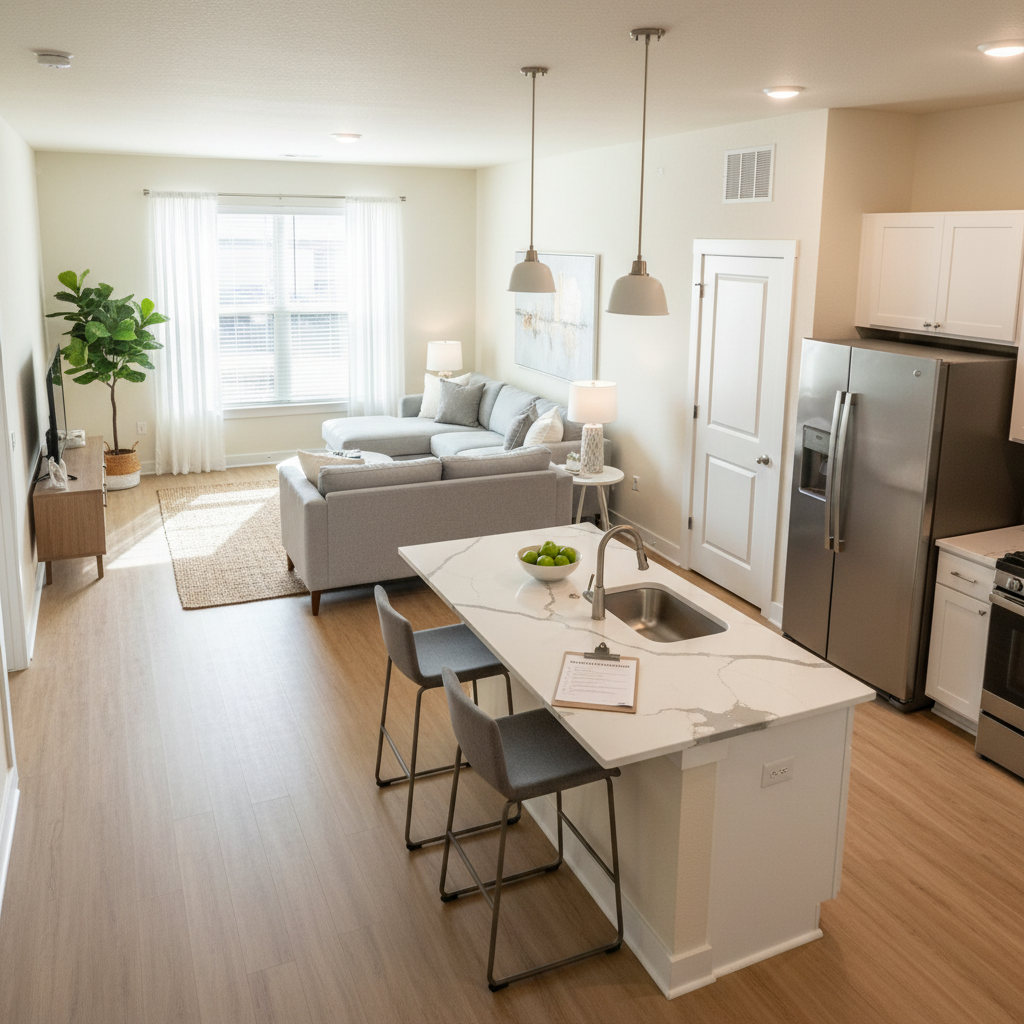
Apartment Turnover Operational Checklist Template for PMs
Reduce vacancy downtime and streamline turns with this operational checklist template for Texas multifamily property managers. Master scheduling, punch lists, and QA.
An apartment turnover operational checklist template is an operator-grade system that tracks pre-move-out inspections, maintenance turns, vendor scheduling, and final sign-offs across a 5-to-7-day window. This standardized workflow minimizes vacant unit days, eliminates missed punch items, and protects property net operating income across competitive Texas multifamily assets.
TL;DR:
- A standardized turnover process limits unit downtime to 5–7 days, protecting thousands in vacancy loss per asset.
- Sequencing maintenance, paint, bulk waste disposal, and clean crews prevents vendor stacking and costly re-cleans.
- Integrating ancillary inspections like HVAC and door-to-door trash containers preserves property assets and utility expense lines.
The True Cost of Turnover Downtime in Texas Multifamily
Turnover downtime measures the revenue lost between the move-out date and the next lease commencement date. Every vacant day costs an asset between $50 and $95 in unrecoverable rent in major Texas metros like Dallas-Fort Worth, Austin, Houston, and San Antonio.
Vacancy Loss per Turn = (Monthly Market Rent ÷ 30 Days) × Days Vacant
When an asset runs an average effective rent of $1,800 per month, each vacant day drains $60 in gross potential rent. A turnover dragging from 5 days to 14 days bleeds $540 in unrecoverable rent per unit. Across a 250-unit Class A community in Austin or Dallas experiencing 45% annual turnover (112 turns per year), that nine-day slip represents over $60,000 in bottom-line NOI leakage.
Controlling vacancy slippage requires implementing robust Property Management Best Practices built around a rigid, linear schedule. While teams can also drive NOI by keeping residents in place through proven resident retention strategies for apartment communities, turns remain an operational reality that demands military execution.
Phase 1: Pre-Move-Out Notice to Move-Out Day (Days -30 to 0)
Phase 1 focuses on proactive unit discovery and early vendor capacity reservations before the resident surrenders the keys. Early inspections allow onsite teams to identify long-lead materials and heavy maintenance needs weeks before keys hit the drop box.
The Pre-Inspection Walk (Day -14 to -7)
Texas property managers should schedule an initial walkthrough 7 to 14 days prior to move-out. The goal is simple: identify scope creep before the turn clock starts ticking.
- Inspect HVAC unit for delta-T performance, dirty coils, and filter neglect.
- Document flooring condition (pet saturation, vinyl plank gouges, carpet burns).
- Check under sinks and behind toilets for slow supply-line leaks or cabinet swelling.
- Note heavy drywall damage, unapproved paint colors, or missing interior doors.
- Confirm door-to-door trash bins are accounted for, clean, and in good repair.
- Pre-order specialized fixtures, appliances, or matching flooring to prevent shipping delays.
Key Surrender and Possession (Day 0)
On the day keys are surrendered, the property management team officially assumes operational control and legal possession of the unit.
- Collect all access fobs, mailbox keys, gate openers, and parking passes.
- Pull water and electric utilities back into the property's master house account.
- Complete formal move-out condition report with date-stamped digital photography.
- Log abandoned property according to Chapter 92 of the Texas Property Code.
- Assign turn schedule in the property management system (Yardi, RealPage, Entrata).
Phase 2: Maintenance and Mechanical Punch (Days 1 to 2)
The maintenance punch phase restores the functional, mechanical, and safety components of the apartment home. Running mechanical and trade repairs prior to paint and flooring prevents vendor re-work and damage.
HVAC and Electrical Turn Scope
Summers in Houston, Austin, and San Antonio push air handlers and condensers to their breaking points. A turn is the only uninterrupted window to perform full mechanical resets.
- Measure temperature split across the evaporator coil (target: 16°F–20°F split).
- Clear condensation drain lines with compressed air and drop algaecide tablets in pan.
- Replace HVAC air filter with property-standard MERV-rated media.
- Test all GFCI outlets in wet areas (kitchens, bathrooms, patios) for proper trip/reset.
- Test smoke alarms and carbon monoxide detectors; replace backup 9V/AA batteries.
- Replace burnt-out fixtures with property-standard LED bulbs (maintain consistent color temp, e.g., 3000K).
Plumbing and Appliance Diagnostics
Plumbing failures represent the single greatest property loss risk during and immediately after a turn.
- Rebuild toilet tanks: replace flappers, fill valves, and check floor flange bolts.
- Snake kitchen and lavatory P-traps; remove accumulated hair and debris.
- Cycle dishwasher through a full wash sequence; inspect pump, float, and door gasket.
- Inspect refrigerator ice maker lines for micro-cracks or crimping.
- Test oven bake and broil elements; verify digital range calibration.
- Clean range hood filters and test vent exhaust cfm.
Phase 3: Paint, Drywall, and Bulk Waste Remediation (Days 2 to 4)
Phase 3 transitions the unit from rough maintenance into clean cosmetic resurfacing and site containment. Coordinating bulk waste removal simultaneously with drywall and paint keeps common breezeways and compactor corrals clear of code violations.
Texas properties frequently struggle with bulk furniture dumps during the move-out wave at the end of the month. When residents abandon mattresses, couches, and heavy trash in corridors or dumpster enclosures, onsite teams lose valuable turn hours hauling debris. Auditing your waste operations through specialized waste removal services for TX apartment complexes prevents breezeway overflow and fire lane hazards during peak turn weeks.
Drywall and Paint Scope
- Remove all wall anchors, drywall screws, and picture hooks.
- Patch holes, apply matching texture (orange peel or knockdown), and prime patches.
- Apply full coat or touch-up using property-standard sheen (typically satin or eggshell for walls, semi-gloss for trim).
- Paint interior doors, trim, baseboards, and window sills.
- Re-spray stained or peeling ceiling sections with flat acoustic/ceiling white.
Flooring Assessment and Resurfacing
- Inspect vinyl plank flooring for edge lifting, seam separation, or subfloor moisture.
- If carpet remains in bedrooms, run commercial extraction or pull for full replacement.
- Inspect tack strips and transitions for exposed nails or trip hazards.
- Seal concrete or plywood subfloor with odor-blocking primer if pet urine is detected.
Phase 4: Housekeeping, Deep Clean, and Fixture Detailing (Day 4 to 5)
Housekeeping transforms a mechanically sound unit into a spotless living space ready for white-glove inspection. A unit must never be painted after the cleaners arrive, as airborne dust and overspray will instantly ruin a freshly scrubbed interior.
The Turnover Housekeeping Checklist
- Kitchen Detailing: Degrease range hood, deep-clean oven interior, wipe down cabinet faces inside and out, sanitize refrigerator shelving and crisper drawers, polish stainless steel appliances.
- Bathroom Sanitation: Descale shower heads, scrub grout and tub surrounds, polish chrome faucets, sanitize toilet bowl, base, and behind-tank areas.
- Living Areas & Millwork: Wipe down baseboards, door frames, switch plates, interior window sills, and blinds/slats.
- Air Registers & Fans: Vacuum ceiling fan blades, motor housing, and return air grilles.
- Floor Detailing: Vacuum edges with crevice tool, mop hard surfaces with pH-neutral cleaner.
Phase 5: The Operational Turnover Schedule and Workflow Matrix
A structured turn workflow prevents trade overlapping, where painters, cleaners, and maintenance technicians step on each other's work. The following schedule outlines a standard 5-to-6-day make-ready progression for Class A and B Texas multifamily communities.
| Day | Primary Stage | Responsible Party | Critical Deliverable |
|---|---|---|---|
| Day 0 | Possession & Walk | Assistant PM / Lead Maintenance | Digital move-out inspection, key inventory, utility transfer |
| Day 1 | Trash-Out & Demo | Porter / Make-Ready Tech | Unit cleared of debris, bulk items hauled, carpet pulled (if replaced) |
| Day 2 | Mechanical & Plumbing Punch | Lead Tech / Trade Vendors | HVAC serviced, plumbing rebuilt, electrical and appliances verified |
| Day 3 | Drywall, Texture & Paint | In-House Paint / Contract Painter | Texture blended, full wall coverage, trim cut, caulk applied |
| Day 4 | Flooring Installation | Flooring Vendor | LVP installed, carpet laid, transitions secured |
| Day 5 | Deep Clean & Detail | Housekeeping Crew | Appliances detailed, bathrooms sanitized, dust removed |
| Day 6 | QA Final Punch & Staging | Property Manager / Make-Ready Lead | Move-in ready sign-off, welcome kit, lock reprogrammed |
Phase 6: Final Quality Assurance and Move-In Readiness (Day 6 to 7)
The final inspection is the property manager's quality control gateway. No unit should ever be coded as "Market Ready" in your property management software without a physical walk by the Property Manager or Assistant PM.
The "White Glove" Walkthrough
- Set thermostat to eco-holding temp (74°F summer / 68°F winter for Texas climate).
- Check under sinks a second time after cleaning crews ran faucets.
- Ensure all light switches turn on corresponding fixtures and fan balances operate quietly.
- Confirm clean door-to-door trash container is staged inside unit (pantry or under-sink).
- Verify smart lock / electronic key credentials sync with access management software.
- Place move-in welcome binder, parking permit, and resident packet on kitchen island.
- Change status to "Make Ready Complete" in property management software.
The Ancillary Asset Audit: Protecting Unit Amenities
Turns are the only predictable point in the lease lifecycle to audit ancillary property assets inside the apartment. High-density Texas communities that run professional doorstep services need strict tracking mechanisms during unit turns.
Doorstep waste collection protects community breezeways and stairwells from resident garbage leaks and stains. Integrating container audits into your turn process ensures your amenity program operates seamlessly. When choosing or re-bidding a provider, property managers should understand that professional doorstep collection services typically cost $8–$11 per door, per month at the vendor level, while the property bills residents an ancillary fee of $20–$30 per month. This spread delivers strong NOI while maintaining pristine corridors across garden and mid-rise properties. Reviewing the operator's guide to valet trash service for apartments in Texas can help your team standardize these turnover container handoffs and maximize operational yield.
Downloadable Apartment Turnover Operational Checklist Template
Use this operational framework as your team's baseline standard operating procedure (SOP). Print this checklist or import it directly into your digital make-ready software.
================================================================================
APARTMENT TURNOVER OPERATIONAL CHECKLIST TEMPLATE
Unit Number: _________   Floor Plan: _________   Turn Start: _________   Target Ready: _________
Lead Tech: ___________   Inspecting PM: ______   Notice Date: ________   Move-Out Date: ________
================================================================================

[ ] PRE-MOVE-OUT (Days -14 to 0)
    [ ] Pre-inspection completed; long-lead parts ordered
    [ ] Key surrender logged; access fobs returned
    [ ] Master house utility accounts activated
    [ ] Full move-out condition photos archived (cloud storage/PMS)
    [ ] Move-out disposition items logged for deposit reconciliation

[ ] TRASH-OUT & TEARDOWN (Day 1)
    [ ] Unit cleared of abandoned resident personal property
    [ ] Breezeway and balcony trash cleared
    [ ] Doorstep collection bin inspected: Clean [ ] Needs Wash [ ] Replace [ ]
    [ ] Blinds, damaged shelving, and discarded items removed

[ ] MAINTENANCE PUNCH (Days 1 - 2)
    [ ] HVAC: Temp split verified (_____°F / _____°F) | Drain lines blown | Filter replaced
    [ ] Electrical: Breaker panel checked | All GFCIs tripped/reset | LED bulbs verified
    [ ] Plumbing: Angle stops checked | Faucet aerators cleared | Toilets rebuilt/dye tested
    [ ] Appliances: Refrigerator clean/cold | Range calibrated | Dishwasher cycle tested
    [ ] Hardware: Interior door handles, passage latches, stops, and cabinet pulls secured

[ ] DRYWALL & PAINT (Days 2 - 3)
    [ ] Drywall patches matched to wall texture (Orange peel / Knockdown)
    [ ] Walls painted (Standard color/sheen: ____________________________)
    [ ] Baseboards, interior trim, and door casing sprayed/brushed
    [ ] Ceilings checked for water spots, stains, or nail pops

[ ] FLOORING & COUNTERTOPS (Day 4)
    [ ] Hard flooring inspected/installed; transitions secured
    [ ] Bedroom carpet cleaned or replaced; seams inspected
    [ ] Countertops inspected for chips, burns, or caulk separation; re-caulked if needed

[ ] HOUSEKEEPING & FINAL CLEAN (Day 5)
    [ ] Full kitchen detail: Oven, range hood, inside/top of fridge, cabinet boxes
    [ ] Full bathroom detail: Tub, tile surrounds, vanity, mirrors, fixtures descaled
    [ ] Windows, tracks, blinds, switch plates, and baseboards wiped down
    [ ] Hard floors vacuumed and wet mopped; carpet final vacuum

[ ] QUALITY ASSURANCE SIGN-OFF (Day 6)
    [ ] Property Manager / Assistant PM physical walk completed
    [ ] Smart lock reprogrammed with new resident digital credentials
    [ ] Thermostat set to property standard eco-holding mode
    [ ] Welcome packet and keys staged
    [ ] Unit marked "READY" in PMS

Sign-Off Tech Signature: ___________________________ Date: ____________
Property Manager Signature: _______________________ Date: ____________
================================================================================
Operational Turn KPI Tracking
Tracking turn metrics provides visibility into maintenance bottlenecks and vendor pricing creep. Multifamily operators should track three core metrics across their portfolio:
- Make-Ready Cycle Time (Days): The elapsed time between the key surrender date and the final PM quality assurance sign-off. High-performing Texas properties average 5.0 to 6.5 business days for standard turns.
- Turn Cost per Unit ($): Total capital spent on maintenance parts, vendor labor, drywall/paint, housekeeping, and flooring. A standard garden-style apartment turn typically averages $1,200 to $2,400, excluding major appliance replacements.
- First-30-Day Work Orders (%): The percentage of new move-ins that submit a maintenance ticket within their first 30 days of occupancy. A tight QA process should keep this metric below 8%. Higher numbers indicate rushed make-readies and sloppy punch work.
Implementing this structured operational checklist template eliminates finger-pointing between office staff and maintenance crews, protects asset integrity, and ensures every turn yields a reliable, revenue-generating home.
Frequently Asked Questions
What is a realistic turnaround time for an apartment turn?
A standard multifamily turnover should take between 5 and 7 business days for a standard condition unit. Rushed turns can be completed in 3 days with pre-scheduled vendors, while heavy turns requiring subfloor repair, cabinet resurfacing, or extensive sheetrock repair may require 10 to 14 days.
How does delayed apartment turnover impact property NOI?
Turnover delays directly create unrecoverable vacancy loss that drops straight to the property's bottom line. For an apartment leasing at $1,800 per month, each vacant day costs the property $60. Reducing turnover cycle times by just four days across 100 turns saves $24,000 in bottom-line NOI annually.
Who should conduct the final make-ready inspection walk?
The Property Manager or Assistant Property Manager should always perform the final sign-off inspection before a unit is marked ready in the property management system. While lead maintenance supervisors oversee technical execution, office management must verify the unit through the eyes of a prospective resident.
What are the most common make-ready punch list items missed during turns?
The most frequently missed punch list items include HVAC filter replacements, loose toilet base bolts, slow sink drainage, missed cleaning behind kitchen appliances, burnt-out exterior patio bulbs, and unprogrammed electronic locks. Standardizing a physical checklist prevents technicians from skipping these small but resident-sensitive items.
How do trash-outs affect turnover scheduling during peak Texas lease cycles?
During summer peak turnover cycles (May through August), unauthorized resident trash dumps can overwhelm dumpster enclosures and hallways, pulling make-ready techs away from skilled mechanical punch lists. Partnering with a professional waste service that handles breezeway sweeps and compactor overflow helps maintenance technicians stay focused on core mechanical turns.
Ready to upgrade your trash valet program?
Discuss your property-specific scope and quote with our team.
Related reading
A PM's Guide to Improving Multifamily Resident Experience
Elevate your Texas apartment community by focusing on three core pillars: operational excellence, high-touch communication, and premium amenities. Learn how to boost resident satisfaction and retention.
11 Cost-Saving Strategies for Apartment Complexes in Texas
Discover 11 operator-grade cost-saving strategies for apartment complexes in Texas. Cut utility expenses, optimize vendor contracts, and boost your Net Operating Income (NOI) with actionable frameworks for PMs.
5 Cost-Saving Strategies for Multifamily Communities in TX
Practical cost-saving strategies for Texas multifamily communities that boost NOI. Learn to cut utility, maintenance, and vendor expenses without sacrificing quality.