A PM's Guide to Resident Retention Strategies Multifamily
Boost your Texas property's NOI by focusing on operational excellence and high-impact amenities. Learn a proven framework for reducing turnover costs and increasing renewal rates.
'''## A PM's Guide to Resident Retention Strategies Multifamily
Effective resident retention strategies in multifamily prioritize operational excellence, high-impact ancillary services, and proactive communication. This approach directly reduces turnover costs, which can exceed $4,000 per unit in Texas, and systematically boosts Net Operating Income (NOI) by stabilizing rent rolls and creating new revenue streams.
TL;DR:
- The cost of turning over a single unit is typically 4-5x the annual cost of a high-value retention amenity like valet trash for that same unit.
- Operational consistency (especially maintenance response time) is the single greatest predictor of resident satisfaction and renewal intent.
- Ancillary services like valet trash provide a dual benefit: they improve the resident experience while creating a new, predictable revenue stream for the property.
The True Cost of Resident Turnover
Resident turnover cost is the total financial loss incurred when a resident vacates a unit. It encompasses everything from marketing and leasing commissions to make-ready repairs and, most significantly, the loss of rental income during the vacancy period. Understanding this figure is the first step to justifying investment in retention.
Calculating this cost reveals the immediate ROI of retention. A single turnover in a Class A or B property in Austin or Dallas can easily cost thousands. For an operator, every renewal is a direct defense of your NOI.
Let's break down the typical costs for a single apartment unit turnover in a competitive Texas market:
| Cost Category | Description | Estimated Cost (200-Unit Property) |
|---|---|---|
| Marketing & Leasing | Advertising spend, ILS fees, broker commissions, staff time for tours. | $400 - $700 |
| Make-Ready Work | Painting, carpet cleaning/replacement, professional cleaning, repairs. | $1,000 - $2,500+ |
| Administrative | Staff time for processing move-out, final statements, and new lease docs. | $150 - $250 |
| Vacancy Loss | Lost rent for the period the unit is empty (e.g., 30-45 days). | $1,800 - $3,000+ |
| Total Estimated Cost | A conservative estimate per turnover. | $3,350 - $6,500+ |
The ROI of Retention in Action
Consider the math. If the average turnover cost is $4,000, preventing just 10 turnovers in a year saves the property $40,000 in direct expenses and lost revenue.
Now, compare that to the cost of a high-impact retention amenity. Implementing a valet trash service from a vendor like Abfall Valet across a 200-unit property costs between $8-$11 per door, per month. At $10/door, the annual cost is $24,000 ($10 x 200 units x 12 months).
In this scenario, if the valet trash service prevents just six turnovers ($4,000 x 6 = $24,000), the service has paid for itself entirely. Every renewal beyond that is pure ROI. This is a core component of modern Property Management Best Practices.
The R.E.N.E.W. Framework for Retention
The R.E.N.E.W. Framework is an operational playbook for structuring and executing your resident retention strategies. It ensures you are focusing on the inputs that have the biggest impact on a resident's decision to stay or leave.
R: Responsive Operations
Responsive operations are the non-negotiable foundation of resident satisfaction. This primarily refers to the speed and quality of your maintenance team and the accessibility of your leasing office. Before any other initiative, your core service delivery must be flawless.
The single biggest driver of resident dissatisfaction and non-renewal is a slow or poor maintenance response. A resident might forgive an aging appliance, but they will not forgive feeling ignored. Aim for a 24-hour response time on non-emergency tickets and have a clear, fast-acting plan for emergencies.
E: Enhanced Amenities
Enhanced amenities are services and features that provide tangible, daily value to residents. The focus for operators in competitive markets like Houston and San Antonio has shifted from massive capital expenditures (e.g., lazy rivers) to high-impact, low-cost services that residents interact with frequently.
The prime example is valet trash service. Residents use it 5 nights a week, providing a constant reminder of the premium living experience. As detailed in our guide to valet trash benefits, it eliminates the need for residents to haul trash across the property, a major convenience point. This service is also a profit center, as the typical $20-$30 resident fee far exceeds the $8-$11 vendor cost.
N: Neighborly Connection
Building a sense of community transforms a transient apartment complex into a place residents feel connected to. This means moving beyond occasional pizza parties and creating authentic opportunities for interaction. Residents who have friends in the building are significantly more likely to renew.
Consider partnerships with local Texas businesses. Host a BBQ catered by a popular Dallas smokehouse, or an onsite coffee tasting with an Austin roaster. These events feel more genuine and support the local economy, which residents appreciate. A digital community board or private social media group can also foster connections.
E: Excellent Communication
Excellent communication is proactive, transparent, and multi-channel. Residents should never feel uninformed about what's happening at their property. Use a combination of email, SMS alerts for urgent matters (like a water shut-off), and your resident portal for updates.
This is most critical during the renewal window. Your renewal outreach should begin 90-120 days before lease expiration, not 30. This gives you time to have a real conversation, address any potential issues, and reinforce the value of staying. A last-minute renewal offer feels transactional; an early one feels relational.
W: Well-Maintained Property
This extends beyond the individual unit to every common area a resident sees. The cleanliness of your breezeways, landscaping, and amenity spaces is a daily referendum on the quality of management. It signals that you care.
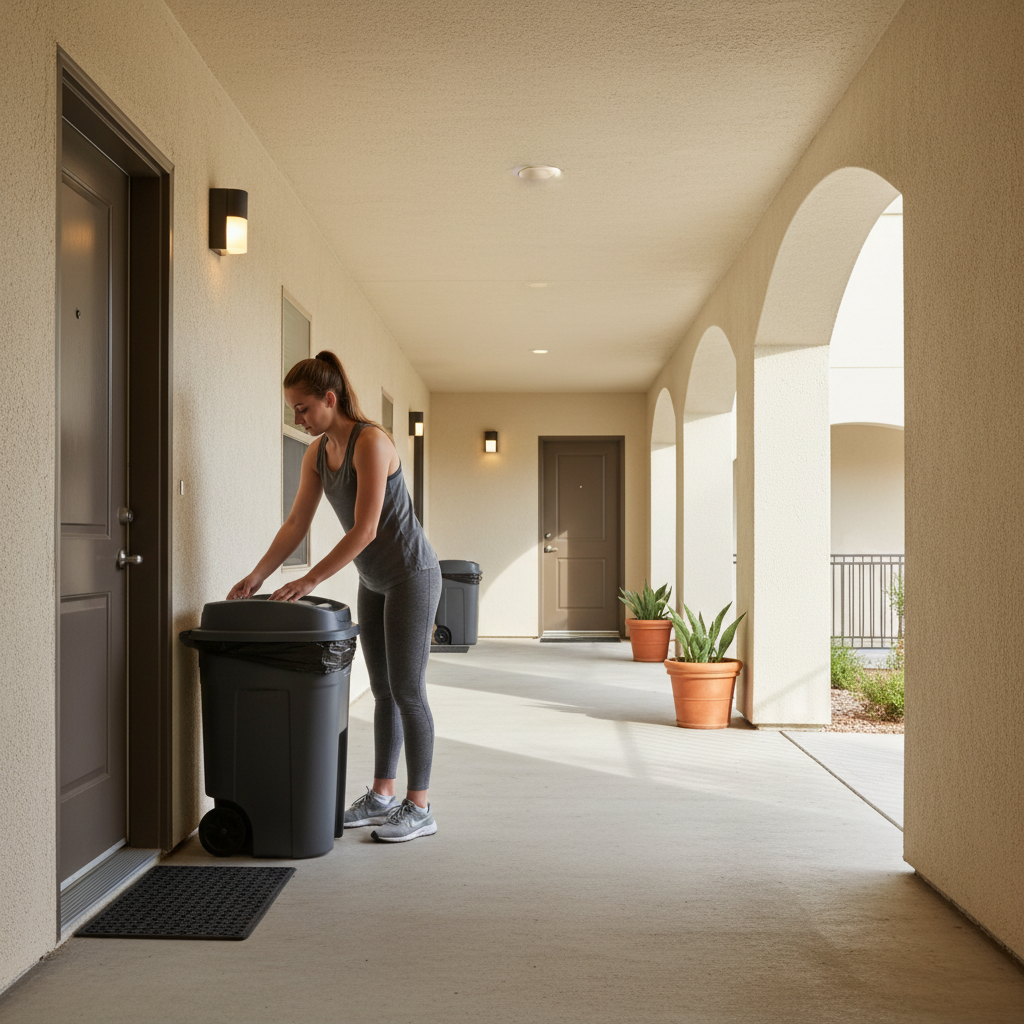
A key part of this is effective waste management. Overflowing dumpsters or trash bags left in hallways are major detractors. This is another area where valet trash services offer a solution. By containing trash in sealed bins outside each door for nightly pickup, it dramatically improves the cleanliness and aesthetics of corridors, as outlined in The Operator's Guide to Valet Trash Service.
Implementing High-ROI Ancillary Services
Ancillary services are amenities offered to residents for an additional fee, creating new revenue streams while enhancing the living experience. For Texas property managers, the goal is to select services that residents value highly and are simple to implement and manage.
Valet trash is the most common and effective ancillary service for boosting both retention and NOI in Texas markets. Its high perceived value, daily utility, and low operational burden for property staff make it a clear winner. Here’s how it compares to other common options:
| Service | Implementation Effort | Resident Impact | NOI Impact | Typical TX Vendor Cost |
|---|---|---|---|---|
| Valet Trash | Low (Vendor-managed) | High (Daily convenience) | High (Profit center) | $8–$11/door/mo |
| Package Lockers | Medium (Requires capex) | High (Security & convenience) | Medium (Can be fee-based) | High upfront cost |
| Smart Home Tech | High (Capex & unit install) | Medium-High (Modern appeal) | Medium (Can justify rent bump) | High upfront cost |
| On-Demand Fitness | Medium (Logistics/scheduling) | Medium (Niche user base) | Low-Medium | Varies by provider |
The valet trash model is straightforward: the property pays a vendor like Abfall Valet $8–$11 per unit per month. The property then bills the residents a mandatory fee of $20–$30 per month. This creates a net profit of $12–$19 per unit, per month, which on a 200-unit property can equate to over $45,000 in new annual NOI.
Measuring What Matters: Retention KPIs
To effectively manage your resident retention strategies, you must track the right Key Performance Indicators (KPIs). These metrics provide an objective view of your performance and highlight areas for improvement.
Renewal Rate
This is the most direct measure of retention. Calculated as (Number of Renewals / Number of Leases Expiring) x 100, it tells you what percentage of residents chose to stay. In competitive Texas markets, a renewal rate above 55% is generally considered strong, but top operators consistently aim for 60% or higher.
Resident Satisfaction Score (e.g., NPS)
A Resident Satisfaction Score, often modeled on the Net Promoter Score (NPS), measures resident loyalty. It's based on a single question: "On a scale of 0-10, how likely are you to recommend our community to a friend or colleague?" This simple survey provides a quantifiable score that predicts renewal intent.
Online Review Sentiment
Monitor your property's ratings and reviews on Google, Yelp, and apartment-specific sites. An increase in positive reviews is a leading indicator of successful retention efforts. Conversely, a spike in negative reviews, particularly regarding maintenance or cleanliness, is a red flag that requires immediate attention.
Maintenance Ticket Resolution Time
As stated earlier, this is a critical operational metric. Track the average time from when a work order is submitted to when it is completed. Consistently keeping this under 24 hours for non-emergency issues is a hallmark of a high-performing property.
Frequently Asked Questions
What is a good resident retention rate for apartments in Texas?
A good resident retention rate in major Texas markets like Austin, Dallas, and Houston is typically between 50% and 60%. Top-tier operators often exceed 60% by implementing robust retention strategies focused on service and high-value amenities.
How much does resident turnover actually cost a multifamily property?
Resident turnover cost varies but typically ranges from $3,350 to over $6,500 per unit. This includes expenses for marketing the vacant unit, make-ready repairs and cleaning, administrative time, and the significant cost of lost rent during the vacancy period.
Are expensive amenities like pools and gyms the best way to improve retention?
While foundational amenities like pools and gyms are important, retention is more strongly influenced by services that provide daily convenience. High-impact, low-cost services like valet trash, responsive maintenance, and secure package handling often have a greater effect on a resident's decision to renew.
How can I improve resident communication without hiring more staff?
Leverage technology. Use a resident portal and automated messaging systems for updates, maintenance requests, and renewal reminders. Scheduling proactive emails and SMS alerts for community news or maintenance schedules ensures residents feel informed with minimal manual effort from your staff.
Does valet trash service actually help with resident retention?
Yes. Valet trash is a highly-rated amenity that residents use 5-7 times per week. This daily convenience and positive interaction with a premium service consistently correlates with higher resident satisfaction scores and increased renewal rates. It removes a common pain point—hauling trash to a distant dumpster.
When should we start talking to residents about renewal?
Begin the renewal conversation 90-120 days before the lease expires. This provides ample time to understand the resident's intentions, address any issues they may have, and negotiate terms without pressure. A last-minute approach feels transactional and can decrease your chances of renewal.
''', keywords=[
Ready to upgrade your trash valet program?
Discuss your property-specific scope and quote with our team.
Related reading
A PM's Guide to Improving Multifamily Resident Experience
Elevate your Texas apartment community by focusing on three core pillars: operational excellence, high-touch communication, and premium amenities. Learn how to boost resident satisfaction and retention.
11 Cost-Saving Strategies for Apartment Complexes in Texas
Discover 11 operator-grade cost-saving strategies for apartment complexes in Texas. Cut utility expenses, optimize vendor contracts, and boost your Net Operating Income (NOI) with actionable frameworks for PMs.
5 Cost-Saving Strategies for Multifamily Communities in TX
Practical cost-saving strategies for Texas multifamily communities that boost NOI. Learn to cut utility, maintenance, and vendor expenses without sacrificing quality.