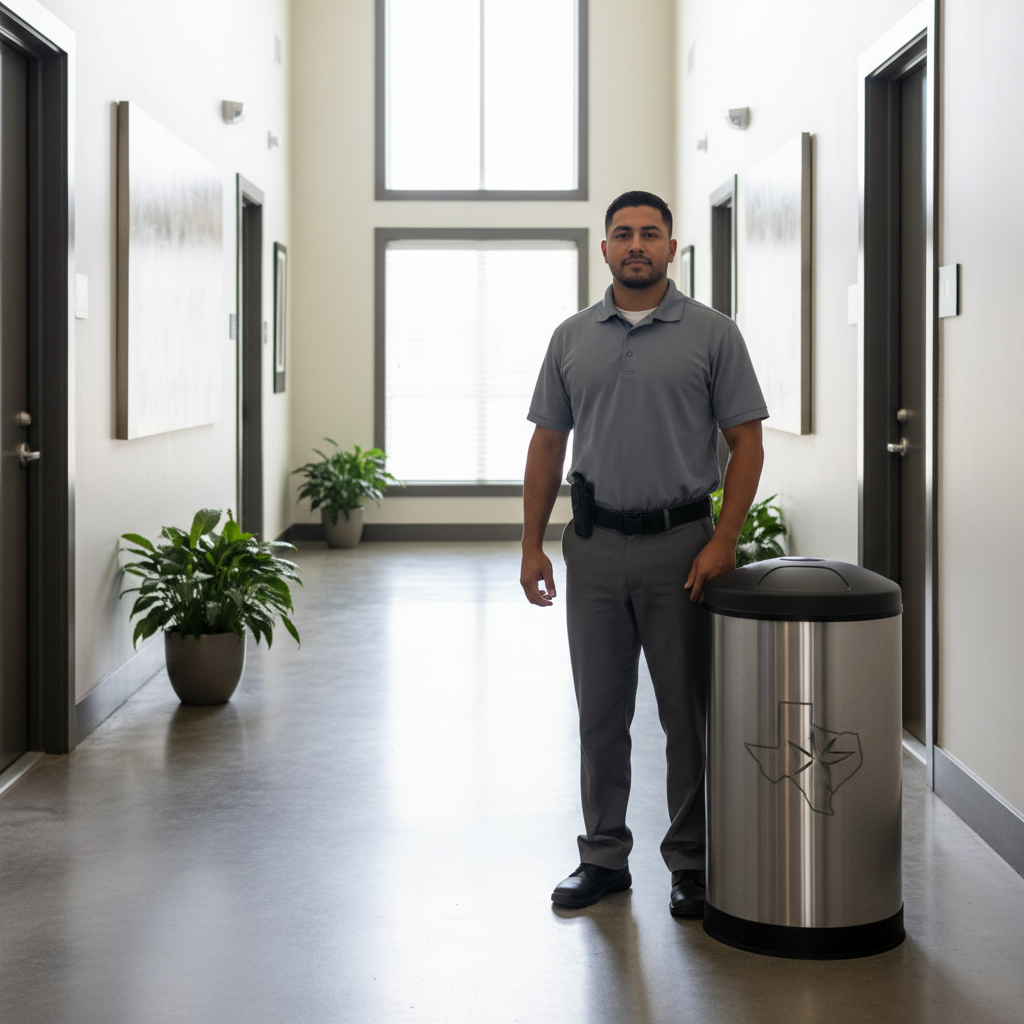
Find a Valet Trash Company Near Me: A Texas Operator's Guide
Stop searching and start vetting. This guide shows Texas property managers how to find a reliable local valet trash company by focusing on operational density, insurance, and NOI-generating partnerships.
'''## How to Find a Valet Trash Company Near Me: A Texas Operator's Guide
Searching for a "valet trash company near me" in Texas requires moving beyond a simple Google search and vetting providers on their operational density and reliability within your specific submarket. The best local partner has the resources, insurance, and route efficiency in Austin, Dallas, Houston, or San Antonio to guarantee service and maximize ancillary revenue.
TL;DR:
- The best local valet trash providers have high route density in your specific submarket, ensuring reliable pickups and fast problem resolution.
- Always verify a vendor's Certificate of Insurance (COI) for at least $1M in General Liability coverage and confirm their compliance status before signing.
- Calculate the ROI, not just the cost. A reliable partner charging $8–$11 per door can generate over $15 per door in monthly NOI, turning the amenity into a significant profit center.
Why "Near Me" Matters: The Local Density Advantage
Choosing a local valet trash provider means selecting a partner with high operational density in your specific submarket, ensuring reliable service and rapid issue response. While many companies claim to serve all of Texas, a provider’s effectiveness is determined by the concentration of their routes and personnel in your immediate area.
A vendor with 20 properties in North Dallas has more operational redundancy and efficiency for your Dallas-based asset than a statewide operator with 50 properties scattered from El Paso to Houston. Local density means that if a porter calls out sick, a supervisor or floating porter is close by to ensure service isn't missed. It means faster response times from regional managers when your on-site team has an issue.
A valet trash company’s local market density is the single greatest predictor of service reliability. Before signing a contract, ask for a list of reference properties in your specific submarket. A vendor who cannot provide this likely lacks the density needed to prevent service failures.
The Vetting Framework: Beyond a Simple Price Comparison
A proper vetting framework moves beyond price-shopping to scrutinize a vendor's operational procedures, insurance coverage, and client references. Using a structured approach ensures you partner with a legitimate operator who protects your asset and enhances its value, rather than a low-cost provider who creates resident complaints and operational drag.
Step 1: Confirm Legitimate Operations (Insurance & Compliance)
This is a non-negotiable first step. A legitimate valet trash operator functions as a true business partner, which means they carry the necessary insurance to operate on your property without exposing you to liability. Request a Certificate of Insurance (COI) and W-9 upfront.
Key items to verify on the COI:
- General Liability: Minimum $1,000,000 per occurrence.
- Automobile Liability: Minimum $1,000,000, especially if they use trucks on-site.
- Worker's Compensation: Statutory limits are required.
- Additional Insured: Your property management company and the property ownership entity should be named as an additional insured.
An uninsured or underinsured valet trash vendor is a significant and unnecessary liability for your asset. If a provider hesitates to produce these documents, or if their coverage is below these minimums, disqualify them immediately. Reputable vendors are already approved in compliance systems like RealPage (formerly Compliance Depot), NetVendor, and others.
Step 2: Analyze Proof of Service & Technology
Accountability is impossible without transparency. Modern valet trash operators use technology to provide undeniable proof of service, eliminating the "your word against theirs" dynamic when a resident reports a missed pickup. Ask potential vendors about their technology stack.
Critical technology includes:
- GPS-Tracked Clock-Ins: Proof that porters were on-site during the designated service window.
- Photo Verification: Photos of each serviced door, often with timestamps and geotags.
- Manager Dashboards: A portal for property managers to view service reports, violation photos, and nightly summaries.
If a vendor’s process relies on paper reports or has no digital verification, you will spend an inordinate amount of time chasing down service credits and managing resident complaints. For more on vendor selection, see our guide on Choosing a Valet Trash Vendor in Texas.
Step 3: Scrutinize the Service Level Agreement (SLA)
The SLA is the contract that governs performance. It must be specific, with clear definitions and remedies for service failures. Vague SLAs benefit the vendor, not the client. The SLA is your primary tool for holding vendors accountable.
Your SLA should explicitly define:
- Service Times: e.g., "Service will commence no earlier than 8:00 PM and conclude no later than 11:00 PM."
- Missed Pickup Protocol: What is the process for reporting a miss? How quickly is a credit issued?
- Property Damage: What is the procedure if a porter damages a railing, door, or breezeway?
- Holiday Schedule: Which specific days are excluded from service?
- Termination Clause: Look for a "termination for cause" clause that allows you to exit the contract if the vendor consistently fails to meet the SLA.
Comparing Valet Trash Companies in Major Texas Markets
Evaluating valet trash vendors requires understanding the unique operational dynamics of each major Texas metropolitan area. A provider who excels in Austin's dense urban core may struggle with the sprawl of the DFW Metroplex. Your vetting process must account for these local nuances.
A one-size-fits-all approach to valet trash service fails in a market as diverse as Texas. Here is how the operational challenges differ and what to look for in a partner in each major metro.
| Market | Key Operational Challenge | What to Look For in a Vendor |
|---|---|---|
| Austin | Traffic congestion, dense downtown/South Congress properties with unique layouts (e.g., mid-rise with interior corridors vs. garden-style). | A provider with experience servicing a mix of asset types and a staffing model that can navigate Austin's traffic to meet service windows. |
| Dallas-Fort Worth | Geographic sprawl, distinct submarkets (e.g., Uptown, Plano, Fort Worth). A vendor's "Dallas" presence may be limited to one area. | Deep route penetration in your specific submarket (e.g., Collin County, Tarrant County). Ask for submarket-specific references. |
| Houston | Extreme traffic, unpredictable weather (especially hurricane season), large property footprints. | A detailed and tested contingency plan for weather events. A larger, well-managed local team that can handle large, sprawling garden-style properties efficiently. |
| San Antonio | Rapid growth, significant new construction, and a mix of older and brand-new assets. | Scalability. A partner who can handle a lease-up and grow with the property. Experience with both Class A new builds and stabilizing Class B/C assets. |
From Cost Center to Profit Center: The ROI Calculation
Valet trash is not an expense but a revenue-generating amenity. Calculating its ROI involves subtracting the vendor's per-door fee from the ancillary fee charged to residents and multiplying by total occupied units. This simple calculation reveals a powerful source of ancillary income that flows directly to your Net Operating Income (NOI).
Here’s the standard operator math used by asset managers across Texas:
- Resident Ancillary Fee: You charge residents a mandatory fee, typically $25 to $30 per month.
- Vendor Service Cost: You pay the valet trash company $8 to $11 per door, per month.
- Net Monthly Profit: The difference, which is $14 to $22 per door, per month.
For a 300-unit property at 95% occupancy (285 units), the annual NOI generated is substantial:
- Low-End Estimate: 285 units * $14/month profit * 12 months = $47,880 in annual NOI
- High-End Estimate: 285 units * $22/month profit * 12 months = $75,240 in annual NOI
A properly managed valet trash program can add over $50,000 in high-margin, predictable revenue to a mid-sized asset. This direct impact on NOI is a key reason it's one of the most effective valet trash benefits that boost multifamily NOI. To model this for your specific asset, explore our guide on calculating the ROI of valet trash for apartments.
Integrating Valet Trash into Your Operations
Successful implementation goes beyond signing a contract; it involves integrating the service into your property's daily workflow and resident communication strategy. A great vendor acts as a partner in this process, providing clear communication materials for residents and training your staff on the new procedures.
The rollout of valet trash is a critical operational project, not just a new amenity. The initial 30 days set the tone for the entire program. This includes distributing containers, communicating service days and rules to residents, and establishing a clear point of contact at the vendor for your on-site team. A smooth rollout prevents confusion and ensures residents immediately see the value. For a complete overview of this process, see our comprehensive pillar on Valet Trash Operations & ROI.
Frequently Asked Questions (FAQ)
This section provides direct answers to the most common questions property managers have when searching for a local valet trash provider.
How much does a valet trash service cost in Texas?
A reliable, insured valet trash vendor in Texas typically costs between $8 and $11 per unit, per month. Properties then charge residents a mandatory fee of $25 to $30 per month, creating a significant source of ancillary income. For a detailed breakdown, see our Valet Trash Service Cost Per Unit guide.
What kind of insurance should a valet trash company have?
Your vendor must carry, at minimum, a $1 million General Liability policy, a $1 million Commercial Auto policy, and a statutory Worker's Compensation policy. Always get a Certificate of Insurance (COI) that names your property as an additional insured before allowing them to begin work.
Can I switch valet trash providers mid-contract?
This depends entirely on the termination clause in your current agreement. Review your contract for "termination for cause" language, which may apply if your current provider has a documented history of service failures. Some contracts also have a "termination for convenience" clause that allows an exit with proper notice.
How long does it take to implement valet trash service?
Standard implementation takes between 14 and 30 days. This timeline allows for proper legal resident notification (if required by the lease), distribution of branded trash containers to each unit, and finalizing the most efficient service routes for the porter. Our guide to implementing valet trash details the full process.
What is the biggest mistake properties make when choosing a vendor?
The most common error is selecting a vendor based on the lowest price alone. This often leads to partnering with an unreliable or uninsured operator, resulting in resident complaints, service failures, and operational headaches that negate any minor cost savings. The smarter approach is to select a partner based on reliability, local density, and proven ability to execute. '''
Ready to upgrade your trash valet program?
Discuss your property-specific scope and quote with our team.
Related reading
How to Implement Valet Trash Service at Your Property
A step-by-step guide for Texas property managers on implementing valet trash service. Learn the 4-phase rollout, from vendor selection to resident onboarding and ROI tracking.
Valet Trash Service for Apartments Pricing: A TX Guide
Understand the real cost of valet trash service for apartments. Learn how the $8-$11/door vendor cost translates into a powerful ancillary revenue stream and boosts your Net Operating Income.
Valet Waste Service Operational Impact: A TX Operator's View
Valet waste service has a massive operational impact, cutting maintenance workload by 5-10 hours weekly and reducing waste-related costs by 15-20%. Learn how it impacts NOI.