Valet Waste Service Operational Impact: A TX Operator's View
Valet waste service has a massive operational impact, cutting maintenance workload by 5-10 hours weekly and reducing waste-related costs by 15-20%. Learn how it impacts NOI.
Valet waste service operational impact is substantial, directly reducing maintenance team workloads by 5-10 hours per week and improving property cleanliness, which can decrease waste-related operating expenses by 15-20%. This service transforms a property’s daily operations by offloading waste management tasks, allowing staff to focus on higher-value activities.
TL;DR:
- Valet trash service cuts maintenance workload by 5-10 hours weekly per property.
- It reduces common area cleaning needs and can lower overall waste disposal costs by 15-20%.
- The service boosts resident satisfaction and retention by providing a high-demand amenity, directly impacting renewal rates.
Understanding the Core Operational Shifts
Implementing a valet waste service fundamentally alters how a property manages refuse, shifting the burden from residents and on-site staff to a specialized third-party vendor. This isn't just about convenience; it's a strategic operational decision that reallocates resources and streamlines daily tasks.
For a typical 250-unit Class B property in Dallas or Houston, the maintenance team might spend over an hour daily dealing with trash-related issues. This includes cleaning overflowing dumpsters, picking up loose trash bags left by residents, and responding to pest control problems exacerbated by improper waste disposal. Valet waste service eliminates the vast majority of these tasks from your team's daily punch list. Instead of your highest-paid maintenance tech hauling trash, they can be turning units or completing revenue-generating work orders. This aligns with the core principles of efficient valet trash operations.
From Reactive Cleanup to Proactive Maintenance
Without valet service, maintenance teams are in a constant state of reactive cleanup. A resident in a third-floor walk-up apartment might drip liquid from a leaky trash bag down three flights of stairs. Another might leave a bag beside a full dumpster because they don't want to touch the contaminated lid. These incidents create immediate, unplanned work for your staff.
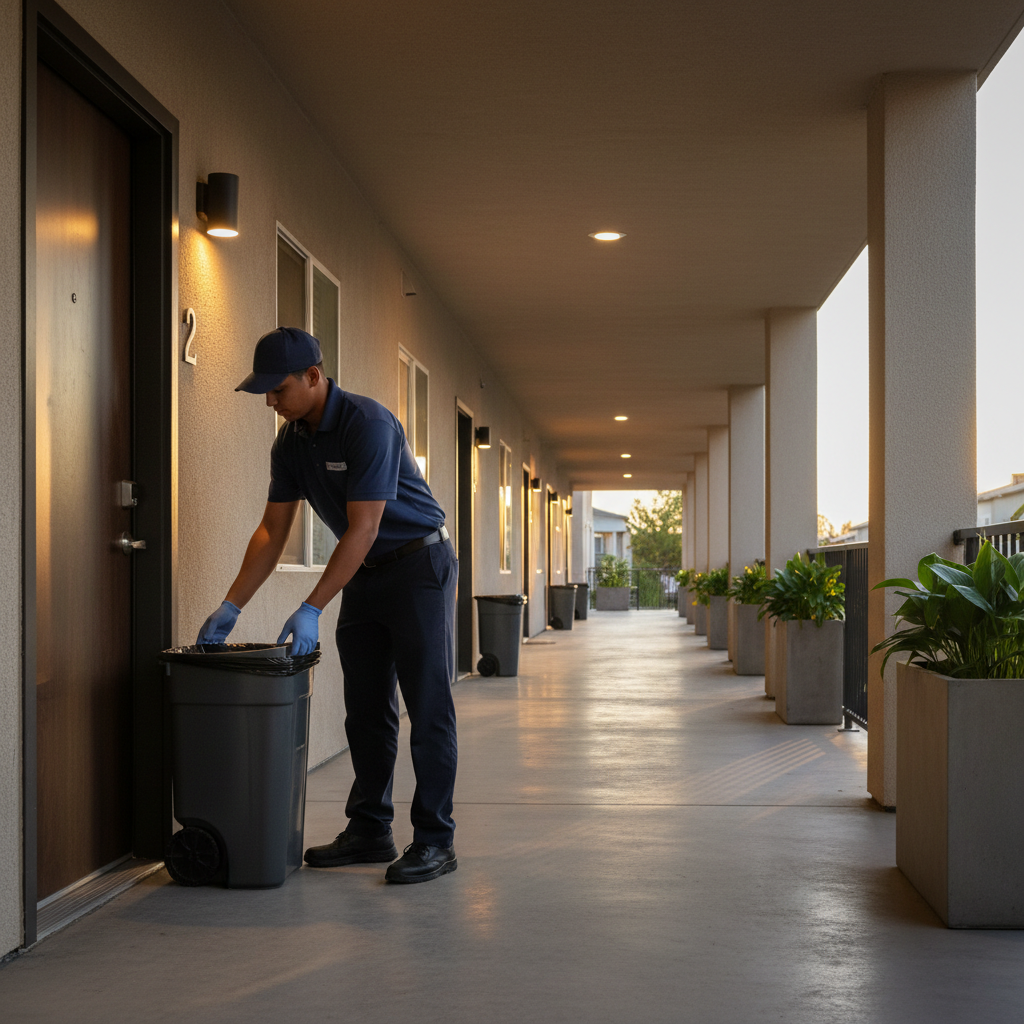
With a professional valet trash provider, the process is standardized. Residents place sealed bags in provided containers outside their doors during a set service window. Uniformed porters collect the bags and transport them to the on-site dumpsters or compactors. This simple change moves your team from a reactive posture—cleaning up messes—to a proactive one, focusing on preventative maintenance and resident service requests.
Quantifying the Impact on Maintenance & Staffing
Valet waste service directly translates into reclaimed man-hours and more efficient staffing, a key component of its operational value. By outsourcing the daily grind of trash collection, properties can redirect their most valuable asset—their people—towards tasks that directly influence resident retention and asset value.
On average, a property can expect to reclaim 5 to 10 hours of maintenance labor per week. For a senior maintenance technician earning $25/hour, that’s a savings of $125–$250 per week, or $6,500–$13,000 annually. This isn’t a cost reduction on paper; it’s tangible time that can be reinvested into turning units faster, reducing contractor spend, and improving curb appeal. The financial benefits are a significant part of the ROI of valet trash.
Time & Motion Study: Before vs. After Valet Trash
A time and motion analysis reveals the stark difference in operational efficiency. We can break down the "trash-out" process for a single maintenance team member at a property without valet service:
- Morning Property Walk (45 mins): Includes picking up loose trash, checking dumpster areas.
- Mid-day Dumpster Check (15 mins): Responding to resident complaints about overflowing bins.
- End-of-day Cleanup (30 mins): Consolidating trash, cleaning spills around dumpsters.
This totals 90 minutes per day, or 7.5 hours per week, spent solely on waste-related cleanup. By implementing valet trash, these tasks are virtually eliminated. The provider handles the collection, and the contained, scheduled pickup drastically reduces loose trash and dumpster overflow. This is a core benefit for any multifamily property manager.
Financial & Budgetary Operational Impacts
Beyond labor savings, valet waste service creates direct and indirect financial benefits that impact a property’s operating budget. These efficiencies stem from reduced costs in waste management, maintenance supplies, and pest control, contributing to a healthier Net Operating Income (NOI).
Properties often see a reduction in overall waste management expenses by 15-20% after implementing a professionally managed valet service. This occurs through several mechanisms. Valet porters are trained to break down cardboard boxes and evenly distribute waste within dumpsters, preventing the costly "phantom fullness" that leads to unnecessary waste hauls. In markets like Austin where recycling and composting are heavily encouraged, a good vendor ensures proper sorting, helping properties avoid contamination fees from municipal waste services.
Impact on Key Budget Line Items
When evaluating the operational impact, it’s crucial to analyze its effect on specific budget lines. The right valet trash vendor in Texas acts as a partner in cost containment.
| Budget Line Item | Impact of Valet Waste Service | Typical Estimated Savings | Texas Market Consideration (Austin, DFW) |
|---|---|---|---|
| Maintenance: Payroll | Reduced overtime, reallocation of hours to higher-value tasks. | 5-10% of time spent on waste | Frees up staff for critical AC work in summer. |
| Maintenance: Supplies | Fewer trash bags for property use, less need for heavy-duty cleaners for spills. | $50 - $150 / month | Reduced need to power wash breezeways from trash leaks. |
| Waste Hauling | More efficient dumpster usage, potential to reduce pickup frequency or dumpster size. | 10-25% on hauling fees | Crucial in cities with high landfill fees. |
| Pest Control | Reduced food sources from overflowing bins and spills. | 5-15% reduction in service calls | Mitigates rodent and insect issues common in hot climates. |
| Ancillary Income | New revenue stream from resident fees ($20-$30/month). | ~$15/door/month in net income | Highly accepted amenity fee in major TX metros. |
This structured approach to cost management and revenue generation is a primary reason why asset managers are mandating valet trash in their Texas portfolios. The service, which costs the property $8-$11 per door per month, generates a net positive NOI when residents are charged a standard $20-$30 monthly fee.
Enhancing Resident Experience and Retention
The operational impact of valet waste service extends beyond staff and budgets to directly influence the resident experience. A clean, well-maintained property is a primary driver of resident satisfaction, and valet trash is one of the most visible and appreciated amenities you can offer.
A streamlined waste service directly correlates with higher resident satisfaction scores and increased likelihood of renewal. In a competitive market like San Antonio or suburban Houston, where new lease-ups are offering significant concessions, retaining your existing residents is paramount. Valet trash removes a daily friction point—the chore of taking out the trash—and replaces it with a hotel-like convenience. This contributes significantly to the overall benefits of valet trash.
Reducing Resident Complaints and Violations
Properties without a formal valet trash program often struggle with waste-related lease violations. These include:
- Leaving trash bags in breezeways or on patios.
- Dumping furniture or large items at the dumpster.
- Improperly disposing of pet waste.
Managing these violations consumes significant staff time, from documenting the issue to sending out notices and assessing fines. A professional valet trash service with clear, enforced guidelines mitigates these issues. The presence of uniformed porters and the formalization of the collection process create a culture of compliance, drastically reducing the number of waste-related complaints and violations your on-site team has to manage.
Frequently Asked Questions
How does valet trash impact my maintenance team's daily workflow?
Valet trash service removes the daily burden of trash-related cleanup from your maintenance team. It eliminates tasks like cleaning up around overflowing dumpsters, handling leaky trash bags left in breezeweways, and responding to complaints about waste areas. This frees up an estimated 5-10 hours of staff time per week, allowing them to focus on work orders, unit turns, and preventative maintenance.
What is the financial impact on my operating budget?
The financial impact is twofold: cost savings and revenue generation. Operationally, you can expect to see reduced expenses in waste hauling (due to more efficient dumpster use), pest control, and maintenance supplies. The service is also a new ancillary revenue stream. By charging residents a typical $20-$30 monthly fee, you more than cover the vendor cost of $8-$11 per door, generating a positive impact on your NOI.
Does valet waste service actually improve property cleanliness?
Yes, significantly. A key operational impact of valet waste service is a dramatic improvement in property cleanliness and curb appeal. With scheduled, door-side pickups in sealed bags, the service prevents overflowing dumpsters, trash-strewn breezeways, and spills. This creates a cleaner, more pleasant living environment for residents and a better impression for prospective tenants.
How does this service affect resident satisfaction and retention?
Valet trash is a high-impact, highly desired amenity that consistently ranks among the top perks for apartment dwellers. By eliminating a daily chore, you improve the resident experience and differentiate your property. This convenience leads to higher resident satisfaction, which is a key factor in improving renewal rates and reducing turnover costs.
Is valet trash service difficult to implement operationally?
No. A professional vendor partner makes implementation seamless. The process typically involves a resident orientation, distribution of containers, and a clear service schedule. The implementation of valet trash is designed to be turnkey, with the vendor handling all logistics. Your on-site team’s primary role is to communicate the new amenity to residents, while the vendor manages the operational execution from day one.
How do I measure the ROI of implementing valet trash service?
Measuring the ROI involves a clear calculation. You sum the new ancillary revenue, the cost savings from reduced maintenance hours, and lower waste-hauling expenses. Then, you subtract the vendor’s per-door service fee. The resulting figure is your net operating income gain. For a detailed breakdown, our guide on calculating valet trash ROI provides a step-by-step framework.
Ready to upgrade your trash valet program?
Discuss your property-specific scope and quote with our team.
Related reading
How to Implement Valet Trash Service at Your Property
A step-by-step guide for Texas property managers on implementing valet trash service. Learn the 4-phase rollout, from vendor selection to resident onboarding and ROI tracking.
Valet Trash Service for Apartments Pricing: A TX Guide
Understand the real cost of valet trash service for apartments. Learn how the $8-$11/door vendor cost translates into a powerful ancillary revenue stream and boosts your Net Operating Income.
Best Valet Trash Companies in Texas: An Operator's Review
Finding the best valet trash companies in Texas requires looking past price to operational reliability, contract terms, and local market expertise. This guide breaks down the key performance indicators.