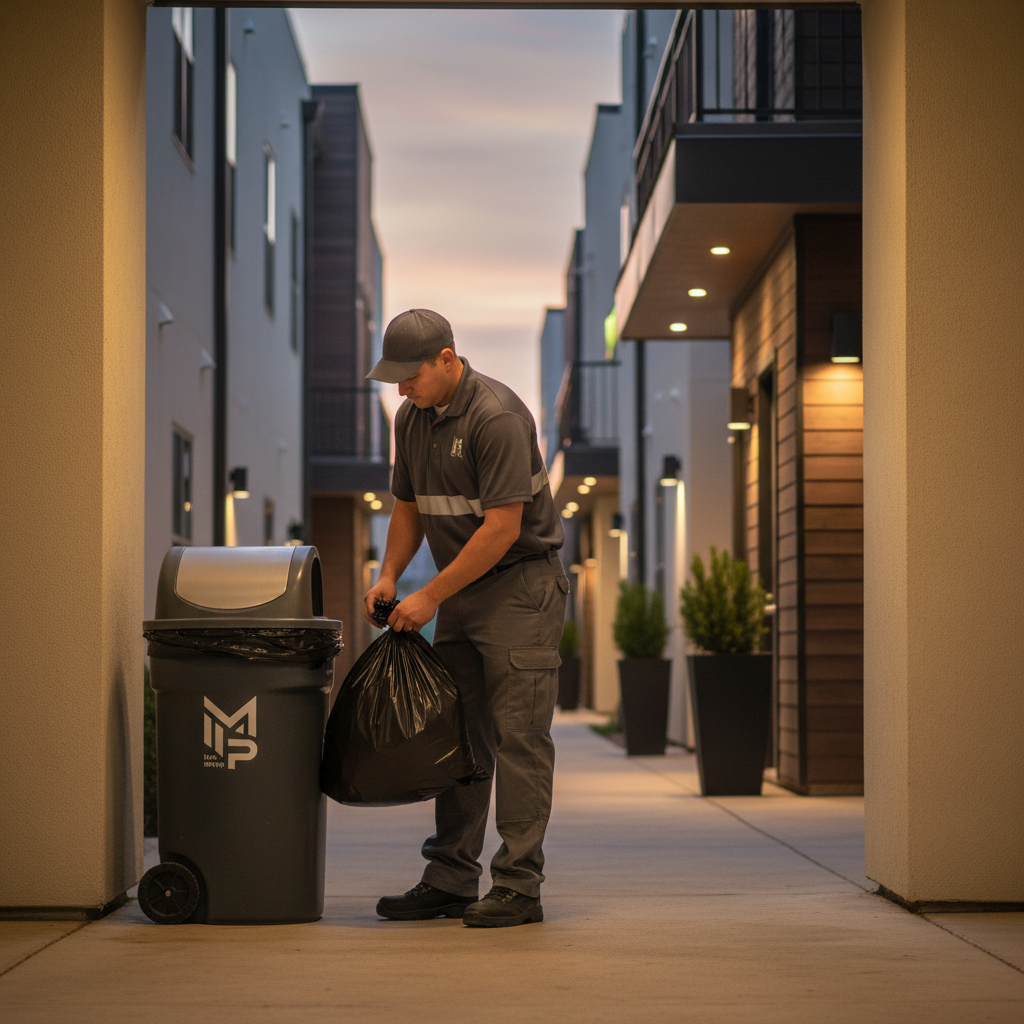
Doorstep Trash Pickup Dallas Apartments: The Operator's Guide
A no-fluff guide to doorstep trash pickup for Dallas apartments. Analyze ROI, benchmark service levels, and avoid common pitfalls with operator-grade intel.
Is Valet Trash a Commodity or a Critical NOI Lever in Dallas?
For Dallas-Fort Worth (DFW) multifamily operators, the line between a "nice-to-have" amenity and a core operational asset is blurring. Doorstep trash pickup is no longer a novelty; it's an expected service in Class A and B properties across North Texas. The question is no longer if you should offer it, but how you can execute it to maximize Net Operating Income (NOI) and minimize operational headaches.
Many operators view valet trash as a pass-through expense, a commodity service where the lowest bidder wins. This is a critical error. In a market as competitive as DFW—from new builds in Frisco to value-add plays in Richardson—your choice of a valet trash partner directly impacts resident satisfaction, ancillary revenue, and site team efficiency. A poorly managed service creates more problems than it solves, flooding your property managers with complaints and tarnishing your community's reputation.
This guide provides a framework for evaluating, implementing, and managing doorstep trash pickup services for Dallas apartments, grounded in operational reality and financial returns.
The Financial Framework: Deconstructing Valet Trash ROI
Asset managers and principals should look at valet trash through a simple but powerful lens: its direct and indirect impact on NOI. The service is a revenue-generator, not just an expense line item.
Direct Revenue Generation
The most common model is charging residents a monthly fee, typically ranging from $25 to $35. Your cost from the valet provider is significantly lower, usually in the $8–$11 per door, per month range. The spread is pure ancillary revenue.
Basic ROI Calculation:
- Property Size: 300 Units
- Resident Fee: $30/month
- Provider Cost: $9.50/door/month
- Gross Ancillary Revenue: 300 units * $30/mo = $9,000/month
- Total Service Cost: 300 units * $9.50/mo = $2,850/month
- Monthly Net Revenue: $6,150
- Annual Net Revenue: $73,800
At a 5.5% cap rate, that $73,800 in additional NOI increases the asset's value by over $1.34 million. This is not a trivial number. The key is securing a reliable provider that allows you to maintain this spread without service failures eroding the perceived value.
Indirect NOI & Operational Savings
Beyond direct revenue, a well-run doorstep collection program generates significant operational efficiencies.
- Reduced Site Team Burden: Your maintenance team is no longer spending hours hauling trash from overflowing dumpsters or cleaning up messes left by residents trying to cram garbage into full chutes. We estimate this saves 5-10 hours of maintenance labor per week, which can be reallocated to work orders and preventative maintenance.
- Cleaner Asset, Higher Rents: A clean property is fundamental to achieving top-of-market rents. Valet trash services eliminate unsightly bags of trash sitting in hallways or breezeways during the day. This directly impacts curb appeal for prospective residents touring the property.
- Lower Pest Control Costs: Overflowing dumpsters and trash left outside are primary attractants for pests. A disciplined, five-night-a-week pickup schedule mitigates this risk, often leading to a reduction in required pest control treatments.
For a deeper dive into optimizing your entire waste stream, from dumpsters to recycling, see our Operator’s Guide to Multifamily Waste Management in Texas.
Benchmarking Service Levels: What "Good" Looks Like in DFW
Not all valet trash providers are created equal. The DFW market is crowded with national giants and smaller local operators. Use this checklist to benchmark potential partners.
The Non-Negotiables
- 5-Night Minimum Service: Sunday through Thursday is the industry standard. Anything less is a disservice to residents.
- Defined Pickup Window: A specific window (e.g., 7:00 PM - 9:00 PM) for residents to place bins, and a firm start time for collection (e.g., 8:00 PM).
- Leak-Proof Bins Provided: The provider must supply professional, branded, and lidded trash receptacles for each unit. This is not optional.
- Professional, Uniformed Porters: Porters must be background-checked, insured, and easily identifiable. This is a matter of resident safety and trust.
- Daily Digital Reporting: You should receive a daily report with GPS verification, photos of any non-compliant units, and a summary of the service. This is your tool for accountability.
Differentiators of an Operator-Grade Partner
- Bulk Trash Integration: How do they handle bulk items? A top-tier partner will have a clear, cost-effective process for removing mattresses, furniture, etc., preventing your dumpster areas from becoming dumping grounds.
- Phase-In & Onboarding Support: A smooth rollout is critical. The provider should supply resident communications, on-site staff for the first week, and clear instructions to minimize confusion and day-one complaints.
- Complaint Resolution SLA: What is their Service Level Agreement for resolving resident-reported issues? A 24-hour resolution target is a reasonable expectation.
- Flexible Contract Terms: Avoid long-term, auto-renewing contracts with punitive termination clauses. Look for providers who offer 1-year terms with performance-based outs. You are the customer; the power should be in your hands.
These service benchmarks are critical across all major Texas markets, from the dense urban cores of Dallas and Houston to the sprawling garden-style communities in Austin and San Antonio. The fundamental operational challenges remain the same.
Common Failure Points and How to Mitigate Them
Where does valet trash service typically break down? The issues are predictable and, with the right partner, preventable.
Inconsistent Pickup Times
- The Problem: Porters arrive sporadically or outside the agreed-upon window. Residents either miss the pickup or leave trash out for extended periods, defeating the purpose of the service.
- The Mitigation: Insist on a provider that uses GPS-tracked mobile apps for their porters. You should be able to verify service times. Implement a system of fines in your service agreement for missed or off-schedule pickups.
Messy Breezeways and Hallways
- The Problem: Porters drag bags, leaving trails of garbage juice and debris. This is the fastest way to turn a premium amenity into a source of resident outrage.
- The Mitigation: This is a training and equipment issue. Your provider must use shoulder-carried, leak-proof collection containers. Specify this in your RFP and your contract. During site walks, ask to see their equipment.
Poor Resident Communication & Enforcement
- The Problem: Residents leave out un-bagged trash, oversized items, or multiple bags. The valet porter refuses to collect it, and it sits in the hallway until your maintenance team deals with it.
- The Mitigation: The provider must have a clear, photo-based reporting system for violations. They take a picture, log the unit number, and you receive the report. Your team then enforces the community rules with a lease violation notice. A good partner acts as your eyes and ears, but enforcement is ultimately the property manager's responsibility.
Navigating the Dallas Market: Specific Considerations
The Dallas-Fort Worth multifamily market has its own unique texture. With a constant influx of new residents and a high volume of construction, competition is relentless.
- New Construction Lease-Ups: In a lease-up environment in areas like Plano or Denton, valet trash is a powerful marketing tool. It’s a tangible, visible amenity that signals a premium living experience. Ensure your provider can scale with your occupancy, starting with a few floors and expanding as you lease up.
- Value-Add Repositioning: For older assets in Mesquite or Irving, adding valet trash can be a key component of a value-add strategy. It justifies a rent bump and immediately improves the property's cleanliness and appeal. It modernizes the asset with a relatively low capital investment.
- Managing Sprawl: DFW is geographically vast. A valet provider with a dense route network in Dallas can operate more efficiently than one stretched thin across the metroplex. Ask potential vendors about their other clients in your specific submarket (e.g., Uptown, Las Colinas, Arlington). This indicates their operational capacity in your area.
As you evaluate your operations, keep the broader context of the Texas Multifamily Market in mind. The trends and challenges we see in Dallas often echo in Austin, Houston, and San Antonio, but each has its local nuances.
Frequently Asked Questions (FAQ)
Q1: Is doorstep trash pickup mandatory for all residents?
Yes, for the service to be financially and operationally viable, it must be implemented for all units in the community. The fee is typically a mandatory charge alongside rent, similar to pest control or package locker fees. This ensures the revenue model works and that service is uniform across the property.
Q2: How much does valet trash service cost an apartment community in Dallas?
Typically, providers in the Dallas market charge between $8–$11 per door, per month. The exact price depends on property size, layout (garden-style vs. high-rise), and the scope of services (e.g., inclusion of recycling, bulk item removal).
Q3: What happens if a resident forgets to put their trash out?
The service runs on a set schedule. If a resident misses the window, they are responsible for taking their trash to the community dumpster or chute. The service does not return for missed pickups. Clear communication during resident onboarding is key to managing this expectation.
Q4: Can valet trash services also handle recycling?
Many top-tier providers offer a recycling component. This is often a separate collection, sometimes on different days, using a distinct, clearly marked bin or bag. This is a huge value-add for environmentally conscious residents and can help properties meet municipal recycling goals.
Q5: Our property has compactors and chutes. Is valet trash still beneficial?
Absolutely. Even with chutes, residents often leave trash on the floor in the trash room, creating messes and blockages. Valet trash eliminates this issue entirely. For properties with distant compactors, the service is a massive convenience driver, preventing residents from driving their trash across the property or, worse, illegally dumping it.
Q6: How do we switch from an underperforming provider?
First, document everything. Use the provider's own daily reports, resident complaints, and photos to build a case of non-performance. Review your contract's termination clause. Most reputable providers will have a 30 or 60-day out for cause. Send a formal, written notice of termination citing the specific, documented failures. A proactive new partner can help you plan the transition to ensure a seamless switch with no service interruption for residents.
Ready to upgrade your trash valet program?
Discuss your property-specific scope and quote with our team.
Related reading
Property Management Trash Solutions in Texas: The Guide
Effective property management trash solutions in Texas combine valet trash services, smart compactors, and bulk item removal to boost NOI and resident satisfaction. This guide covers the operational specifics for TX markets.
Valet Waste Service for Texas Properties: An Operator's Guide
A guide to valet waste service for Texas properties. Discover how to vet vendors, calculate ROI, and deploy a top-tier trash amenity in Austin, DFW, Houston, and San Antonio.
Texas Apartment Complex Valet Trash: An Operator's Guide
A complete guide to implementing valet trash services in Texas apartment complexes. Learn the ROI, operational best practices, and vendor selection criteria for Austin, DFW, Houston, and San Antonio.