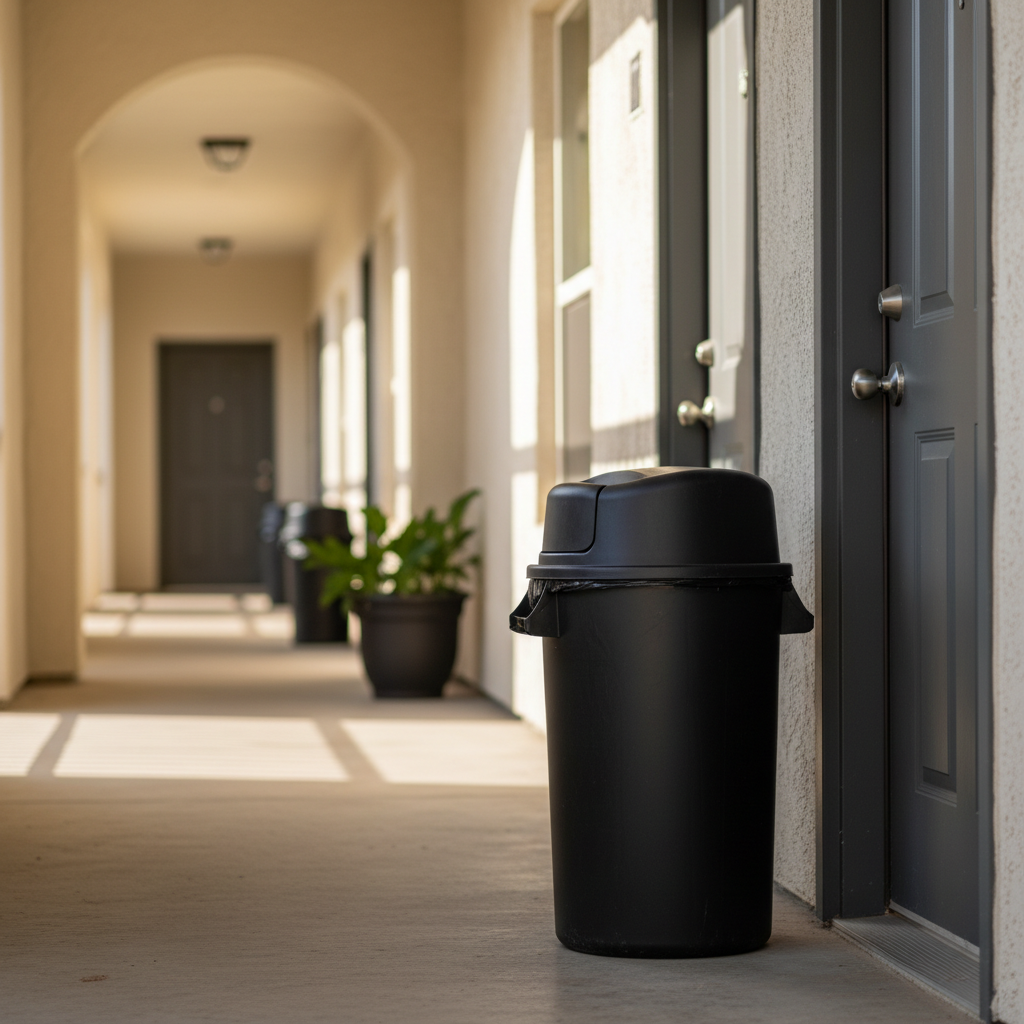
Calculating Valet Trash ROI for Your Multifamily Property
Valet trash delivers a direct ROI of 100-200%+ for multifamily properties by creating a high-margin ancillary revenue stream. Learn how to calculate the real return.
'''## Valet Trash ROI for Multifamily Properties: A TX Operator's Guide
The valet trash ROI for a multifamily property is typically 100% to 200% or more, driven by a simple formula: charging residents a monthly fee ($20-$30) that significantly exceeds the vendor’s service cost ($8-$11 per unit). This creates a predictable, high-margin ancillary revenue stream that directly boosts Net Operating Income (NOI).
TL;DR:
- The primary valet trash ROI comes from the spread between the monthly resident fee and the per-door vendor cost, often yielding over $15 in net profit per unit, per month.
- Calculating ROI is a straightforward formula: Net Annual Ancillary Income divided by the Total Annual Service Cost. A 150% ROI is standard.
- Beyond direct profit, valet trash provides "soft ROI" by saving 5-10 hours of weekly maintenance staff time and increasing the property's overall asset value at disposition.
Deconstructing Valet Trash ROI: The Core Calculation
Valet trash ROI is the direct financial return an asset realizes from the service. It is measured by comparing the net ancillary income generated against the total vendor service cost. For Texas operators, this calculation is the foundation of valet trash as a profit center, not just an amenity.
The formula is direct: ROI = (Net Annual Profit / Annual Service Cost) * 100
Let’s apply this to a common Texas scenario: a 250-unit, Class A-minus property in a Dallas suburb.
-
Vendor Cost: Your property contracts with a valet trash provider for $9.00 per door, per month.
$9.00/door * 250 doors = $2,250 total monthly cost.$2,250 * 12 months = $27,000 total annual cost.
-
Resident Ancillary Fee: You add a mandatory $25.00 per month valet trash fee to each resident’s ledger.
$25.00/door * 250 doors = $6,250 total monthly revenue.$6,250 * 12 months = $75,000 total annual revenue.
-
Net Profit & ROI: Calculate the difference.
- Net Annual Profit:
$75,000 (Revenue) - $27,000 (Cost) = $48,000 - Direct ROI:
$48,000 / $27,000 = 1.77or 177% ROI.
- Net Annual Profit:
In this standard scenario, the property generates $48,000 in pure, new NOI. The direct financial ROI for valet trash is consistently over 100% for most Texas multifamily assets. This isn’t a hypothetical; it’s the standard operational model for thousands of properties across the state.
Valet Trash as a Profit Center: Ancillary Revenue Deep Dive
Ancillary revenue from valet trash is the income generated by charging residents a monthly fee for the service, which is intentionally set higher than the operational cost. This transforms a necessary service into a reliable income stream, directly impacting your property's financial health.
Properly structured valet trash programs are pure Net Operating Income (NOI) drivers. The key is the spread between your cost and the resident-facing fee. While vendor costs in markets like Austin and Houston are typically in the $8–$11 per unit range, the market-accepted resident fee is $20–$30. This creates a significant, built-in profit margin.
Let's model this out for a 300-unit community to see the impact of a moderate vs. an aggressive pricing strategy.
| Metric | Scenario A (Moderate) | Scenario B (Aggressive) |
|---|---|---|
| Property Size | 300 Units | 300 Units |
| Vendor Cost/Door | $9.50 | $9.50 |
| Total Vendor Cost (Monthly) | $2,850 | $2,850 |
| Resident Fee/Door | $25.00 | $28.00 |
| Total Resident Revenue (Monthly) | $7,500 | $8,400 |
| Net Operating Income (Monthly) | $4,650 | $5,550 |
| Net Operating Income (Annual) | $55,800 | $66,600 |
| Direct ROI | 163% | 195% |
As the table shows, even a $3 difference in the monthly resident fee generates an additional $10,800 in annual NOI. Understanding the nuances of this model is critical. For a deeper analysis of the cost side of the equation, review our Valet Trash Service Cost Per Unit: A Texas Operator's Guide.
H3: The "Soft" ROI: Operational Efficiency and Staffing Impact
"Soft ROI" refers to the indirect financial gains from operational efficiencies, primarily by reallocating maintenance staff time from low-value trash tasks to high-value, revenue-generating work. This is a critical, though often unmeasured, component of your total return.
Before valet trash, your maintenance team is your de facto trash crew. They spend significant time on tasks that are eliminated by a professional service:
- Compactor/Dumpster Management: Cleaning spills, breaking down boxes, and managing overflows around the property’s central dumpsters.
- Grounds Pickup: Policing the property for loose trash bags left by residents taking a shortcut.
- Unit Turns: Hauling out trash left by vacating residents.
- Weekend Patrols: Your highest-paid on-call tech is often forced to deal with trash issues on a Saturday.
Reclaiming 5-10 hours of maintenance time per week directly translates to faster unit turns and improved property conditions. For a 250-unit property, saving just 7 hours per week for a maintenance tech earning $23/hour in San Antonio adds up quickly:
7 hours/week * $23/hour * 52 weeks = $8,372 in recaptured labor costs annually.
This reclaimed time can be spent on work orders and make-readies, reducing turnover times and increasing resident satisfaction. This operational dividend is a core part of the overall Valet Trash Operations & ROI framework.
Asset Value Amplification: How NOI Boosts Property Worth
The increased Net Operating Income (NOI) from valet trash directly increases a multifamily property's valuation by applying a market capitalization (cap) rate. This is where the ancillary income stream has the largest financial impact for owners and asset managers.
The calculation is simple but powerful: Increase in Property Value = Annual NOI Increase / Market Cap Rate
Let’s use the numbers from our 300-unit property in the "Aggressive Scenario" from the table above. That program generated $66,600 in new annual NOI.
Now, let's apply a standard 5.5% cap rate, typical for a stabilized asset in the current Texas market:
$66,600 / 0.055 = $1,210,909
Implementing valet trash added over $1.2 million to the property’s market value. This isn't accounting magic; it's the direct result of increasing the property's profitability. A $28/month resident charge can add over $1 million to a 300-unit property's valuation at disposition. This makes valet trash one of the highest-impact initiatives for boosting asset value, a key component discussed in [Valet Trash Benefits That Boost Multifamily NOI](/blog/valet-trash-benefits-that-boost-multifamily-noi).
Mitigating Risks to Protect Your ROI
While valet trash ROI is high, operators must account for potential risks like poor vendor performance, resident pushback, and hidden contract fees to protect their returns. A poorly managed service can quickly turn a profit center into an operational headache.
The biggest threat to valet trash ROI is selecting a non-performing vendor. Missed pickups, stained breezeways, and unprofessional service providers don't just frustrate residents; they create more work for your on-site team, eroding the "soft ROI" you were supposed to gain.
Key risks include:
- Service Failures: When the vendor fails to show up or does a sloppy job, your staff has to clean up the mess and field resident complaints. This negates the operational benefit.
- Negative Online Reviews: A poorly run valet service is a frequent subject of negative online reviews, which can damage your property's reputation and leasing velocity.
- Contract Traps: Many national providers use predatory contracts with long-term commitments, automatic renewals, and steep termination penalties. This can lock you into a failing relationship.
Protecting your ROI requires rigorous vendor selection. You need a partner who understands the Texas market and operates as a true extension of your team. For guidance on this, see our operator's guide on [how to find the best valet trash company for multifamily](/blog/how-to-find-the-best-valet-trash-company-for-multifamily).
Frequently Asked Questions (FAQ)
How do I calculate the exact ROI for my specific property?
To calculate the ROI, you need two numbers: your all-in vendor cost per door and the ancillary fee you will charge residents. The formula is: [((Resident Fee - Vendor Cost) * # of Units * 12) / (Vendor Cost * # of Units * 12)] * 100. A reliable vendor can provide a specific quote to make this calculation precise.
Can valet trash really improve my property's cleanliness?
Yes, when managed by a professional operator. A quality valet trash service collects trash 5-7 nights a week directly from the resident's door, drastically reducing the volume of trash being carried through hallways and across the property. This leads to cleaner common areas, fewer pests, and eliminates unsightly overflowing dumpsters.
What is a typical valet trash fee for residents in Texas?
Across major Texas markets like Dallas, Houston, Austin, and San Antonio, the standard monthly valet trash fee charged to residents ranges from $20 to $30. The exact amount depends on the property class (A, B, or C) and what the local submarket will bear.
How does valet trash affect resident retention?
High-quality valet trash service acts as a luxury amenity that residents appreciate and come to expect. It improves their daily living experience by providing convenience and cleanliness. Conversely, a poorly executed service is a major source of frustration and can actively harm retention rates.
Is valet trash a mandatory fee?
Yes. To function as a successful ancillary revenue program, valet trash is implemented as a mandatory service for all residents via a lease addendum. This ensures universal participation, which is necessary for both operational efficiency and achieving the financial returns projected.
How does market (e.g., Dallas vs. San Antonio) affect valet trash ROI?
While vendor costs ($8-$11/door) are relatively stable across major Texas metros, the primary variable is the ceiling for resident ancillary fees. A Class A high-rise in Downtown Austin may support a $30-$35 fee, whereas a Class B property in a San Antonio suburb might max out at $22-$25. The core ROI remains high in all markets, but the total NOI is sensitive to local rent and fee tolerance. '''
Ready to upgrade your trash valet program?
Discuss your property-specific scope and quote with our team.
Related reading
How to Implement Valet Trash Service at Your Property
A step-by-step guide for Texas property managers on implementing valet trash service. Learn the 4-phase rollout, from vendor selection to resident onboarding and ROI tracking.
Valet Trash Service for Apartments Pricing: A TX Guide
Understand the real cost of valet trash service for apartments. Learn how the $8-$11/door vendor cost translates into a powerful ancillary revenue stream and boosts your Net Operating Income.
Valet Waste Service Operational Impact: A TX Operator's View
Valet waste service has a massive operational impact, cutting maintenance workload by 5-10 hours weekly and reducing waste-related costs by 15-20%. Learn how it impacts NOI.