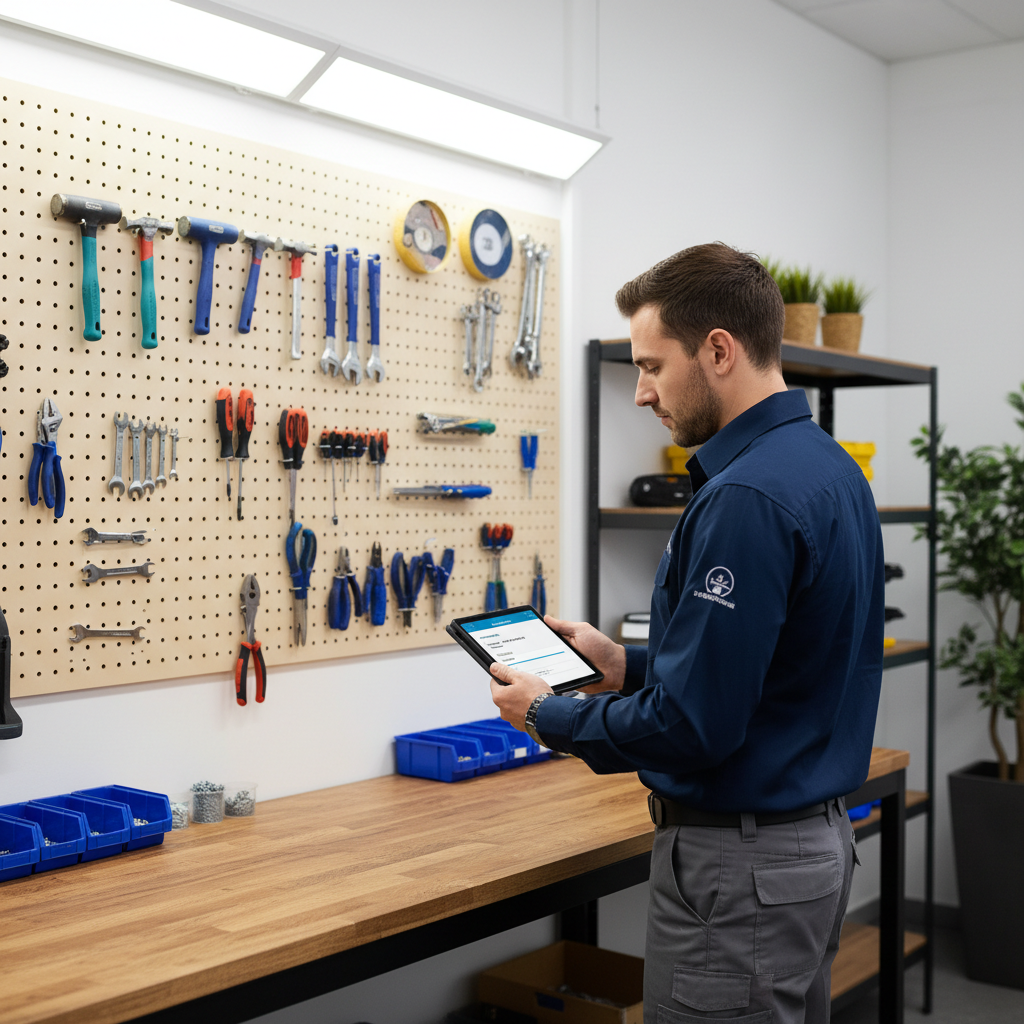
Apartment Maintenance Management: A TX Operator's Guide
Stop fighting fires. Implement proactive apartment maintenance management with our Texas-focused playbook. We cover preventative schedules, vendor scorecards, and tech stacks for PMs.
'''The best practices for apartment maintenance management involve a systematic approach combining proactive scheduling, rigorous vendor management, and modern technology. This shifts the maintenance team from a reactive, fire-fighting mode to a proactive, asset-preservation footing, directly impacting Net Operating Income (NOI) and resident satisfaction across your Texas properties.
TL;DR:
- Shift from reactive to proactive maintenance by categorizing all work into a four-tier system: Routine, Preventive, Corrective, and Cosmetic.
- Implement a Vendor Scorecard to objectively measure and manage all third-party contractors on cost, quality, and compliance.
- Leverage a modern tech stack, including a CMMS and resident app, to streamline work orders, track asset history, and improve communication.
The Four Tiers of Apartment Maintenance
Effective maintenance management categorizes every task into one of four tiers: Routine, Preventive, Corrective, or Cosmetic. This framework clarifies priorities for your maintenance supervisor and technicians, ensuring resources are allocated efficiently to protect the asset and serve residents.
Routine & Preventive: The Foundation of Asset Protection
Routine maintenance includes daily or weekly tasks essential for property appearance and function, while preventive maintenance involves scheduled checks to stop failures before they happen. Together, they form the backbone of a well-run property.
Routine tasks are about consistency: daily grounds cleanup, checking lighting, and managing common areas. Many Texas operators successfully outsource specific routine tasks. For instance, using a reliable valet trash provider for $8–$11 per door, per month can free up your on-site team from hauling trash, allowing them to focus on higher-value tasks.
Preventive maintenance is where you generate real ROI. This includes quarterly HVAC filter changes, annual roof inspections, and semi-annual water heater checks. A well-executed preventive maintenance program can reduce reactive, and more expensive, work orders by over 50%.
Corrective & Cosmetic: Managing Resident Satisfaction
Corrective maintenance is the reactive work of fixing something that has already broken, while cosmetic maintenance focuses on preparing units for new residents (the "make-ready" process). The efficiency here is critical for both your budget and your reputation.
When a resident in Austin submits a work order for a broken AC in July, your response time is paramount. The speed and quality of corrective maintenance directly impact resident retention. A positive maintenance experience is a top driver for lease renewals, a key component for improving your property's performance. You can learn more about this in our guide on how to improve resident retention in apartment communities.
Cosmetic maintenance during the turn process—new paint, floor cleaning, fixture updates—is your chance to set the standard for a new lease. A flawless make-ready reduces the number of "move-in" work orders and starts the resident relationship on solid ground.
Building a Proactive Maintenance Schedule
A proactive maintenance schedule is a calendar-based plan that schedules inspections, servicing, and replacements for all major property systems before they fail. This document is the operational playbook for your maintenance supervisor and the financial roadmap for your asset manager.
The Asset & Task Matrix
To build this schedule, create a simple matrix. List all major physical assets (HVAC units, water heaters, roofs, boilers, pools) down the vertical axis. List the months or quarters of the year across the horizontal axis. Then, fill in the cells with the required preventive task.
This matrix becomes the single source of truth for your maintenance supervisor and regional manager. It transforms maintenance from a guessing game into a predictable, scheduled operation.
| Asset | Q1 (Jan-Mar) | Q2 (Apr-Jun) | Q3 (Jul-Sep) | Q4 (Oct-Dec) |
|---|---|---|---|---|
| HVAC Systems | Pre-summer check | Filter change | Filter change | Pre-winter check |
| Roofing | Inspect for damage | Clean gutters | Inspect post-storm | Clean gutters |
| Water Heaters | Inspect & flush | N/A | Inspect & flush | N/A |
| Pool Equipment | Open & inspect | Weekly service | Weekly service | Winterize & close |
| Fire Safety | Inspect extinguishers | Test smoke alarms | Inspect extinguishers | Test smoke alarms |
Budgeting for Proactive Maintenance
Proactive maintenance requires dedicated budget allocation, not just relying on what’s left over after emergencies. While capital-intensive replacements fall under CapEx, the labor and materials for preventive tasks are an operating expense. A common benchmark for total maintenance and repair costs is 10-15% of Gross Potential Rent.
Proactive maintenance shifts costs from unpredictable emergency repairs to predictable operating expenses. This allows for smoother cash flow and more accurate forecasting. This disciplined approach is a cornerstone of strong Property Management Best Practices.
Vendor Management & The Operator's Scorecard
A Vendor Scorecard is a standardized tool used to rate and manage third-party vendors based on predefined KPIs like cost, quality, responsiveness, and compliance. In a state as large as Texas, you cannot personally oversee every contractor at every property in Dallas, Houston, and San Antonio. A scorecard system creates accountability.
Key Metrics for Your Vendor Scorecard
Stop managing vendors based on "gut feel" or historical relationships. Implement a quarterly review system based on hard data. Your scorecard should be simple and focused on what matters to the asset.
What gets measured gets managed; a scorecard removes subjectivity from vendor relationships.
| KPI | Measurement | Target (Example) |
|---|---|---|
| Quality of Work | Callback Rate / Inspection Score | < 5% callback rate |
| Cost | Price vs. Market / Invoice Accuracy | Within 10% of approved bid |
| Responsiveness | Time to First Contact / Time to Job | < 2 hours / 24-48 hours |
| Compliance | Insurance & Licensing on File | 100% compliant |
| Communication | Quality of status updates | Proactive updates, no follow-up needed |
Case Study: Auditing Your Waste Removal Vendor
Your waste management services are a perfect candidate for the scorecard system. A poorly managed trash program leads to overflowing dumpsters, resident complaints, and extra work for your maintenance team. These are direct, measurable impacts.
Start by performing a service audit. Does your valet trash provider show up during the contracted hours? Are they leaving common areas and breezeways clean? Are they adhering to your community’s rules? A thorough guide on this process can be found in our post: Waste Removal Services for TX Apartment Complexes: An Audit. A simple vendor audit can often uncover thousands in savings or justify a switch to a more reliable partner.
The Modern Maintenance Tech Stack
The modern maintenance tech stack consists of integrated software—primarily a Computerized Maintenance Management System (CMMS)—that digitizes work orders, asset tracking, and resident communication. Paper work orders and disjointed spreadsheets are no longer viable for managing a multifamily portfolio.
Core Components: CMMS and Resident Apps
The CMMS is the central hub. It allows residents to submit service requests via a portal or mobile app, which are then automatically logged, assigned to a technician, and tracked through completion. The resident receives status updates, and the property manager gets a complete data trail.
Leading platforms like AppFolio, Yardi, and RealPage offer robust maintenance modules. Standalone CMMS solutions like MaintainX and UpKeep are also powerful options that can integrate with your existing property management software. The goal of the tech stack is to create a closed-loop system where no request is lost and all data is captured.
ROI of Maintenance Tech
Implementing a CMMS is not a cost center; it's an investment in efficiency. The ROI comes from several sources: reduced administrative time logging and tracking paper orders, optimized technician routes, and bulk ordering of parts based on historical data.
A tech-enabled maintenance team can typically handle 15-20% more work orders than a paper-based team of the same size. Investing in the right software typically yields a positive ROI within 6-12 months through improved efficiency and data-driven decision-making. This efficiency gain allows your team to spend more time on value-add preventive tasks.
Frequently Asked Questions about Apartment Maintenance Management
What is a good ratio of maintenance staff to apartment units?
A general industry benchmark is one maintenance technician for every 100-125 units. However, this can vary based on the age of the property, the number of amenities, and whether you outsource services like landscaping or valet trash.
How much should I budget for apartment maintenance annually?
Plan to budget between 1-2% of the property's total value for maintenance annually. Alternatively, a common method is budgeting around 10-15% of your Gross Potential Rent for all maintenance and repair operating expenses, separate from major capital expenditures.
What's the difference between a work order and a service request?
A service request is the initial submission from a resident (e.g., "my sink is leaking"). Once a property manager or maintenance supervisor validates the request and assigns it to a technician for action, it becomes a work order with a tracking number and a defined scope.
How can I reduce maintenance team turnover?
Pay competitively, provide clear paths for advancement (e.g., Technician to Supervisor), invest in quality tools and technology (like a CMMS), and protect your team from resident abuse. Acknowledging good work and fostering a respectful environment are key retention tools.
What are the most common emergency maintenance requests in Texas?
In Texas, the most frequent emergency calls are for HVAC failures (especially in summer), major water leaks (from burst pipes or water heaters), electrical outages affecting an entire unit, and lockouts. A close second in many buildings are sewer or drain backups.
How does valet trash service impact my maintenance team's workload?
A reliable valet trash service significantly reduces the burden on your maintenance team. It eliminates the time they spend dealing with overflowing dumpsters, cleaning up trash spills in common areas, and responding to resident complaints about waste, allowing them to focus on skilled maintenance tasks. '''
Ready to upgrade your trash valet program?
Discuss your property-specific scope and quote with our team.
Related reading
A PM's Guide to Improving Multifamily Resident Experience
Elevate your Texas apartment community by focusing on three core pillars: operational excellence, high-touch communication, and premium amenities. Learn how to boost resident satisfaction and retention.
11 Cost-Saving Strategies for Apartment Complexes in Texas
Discover 11 operator-grade cost-saving strategies for apartment complexes in Texas. Cut utility expenses, optimize vendor contracts, and boost your Net Operating Income (NOI) with actionable frameworks for PMs.
5 Cost-Saving Strategies for Multifamily Communities in TX
Practical cost-saving strategies for Texas multifamily communities that boost NOI. Learn to cut utility, maintenance, and vendor expenses without sacrificing quality.