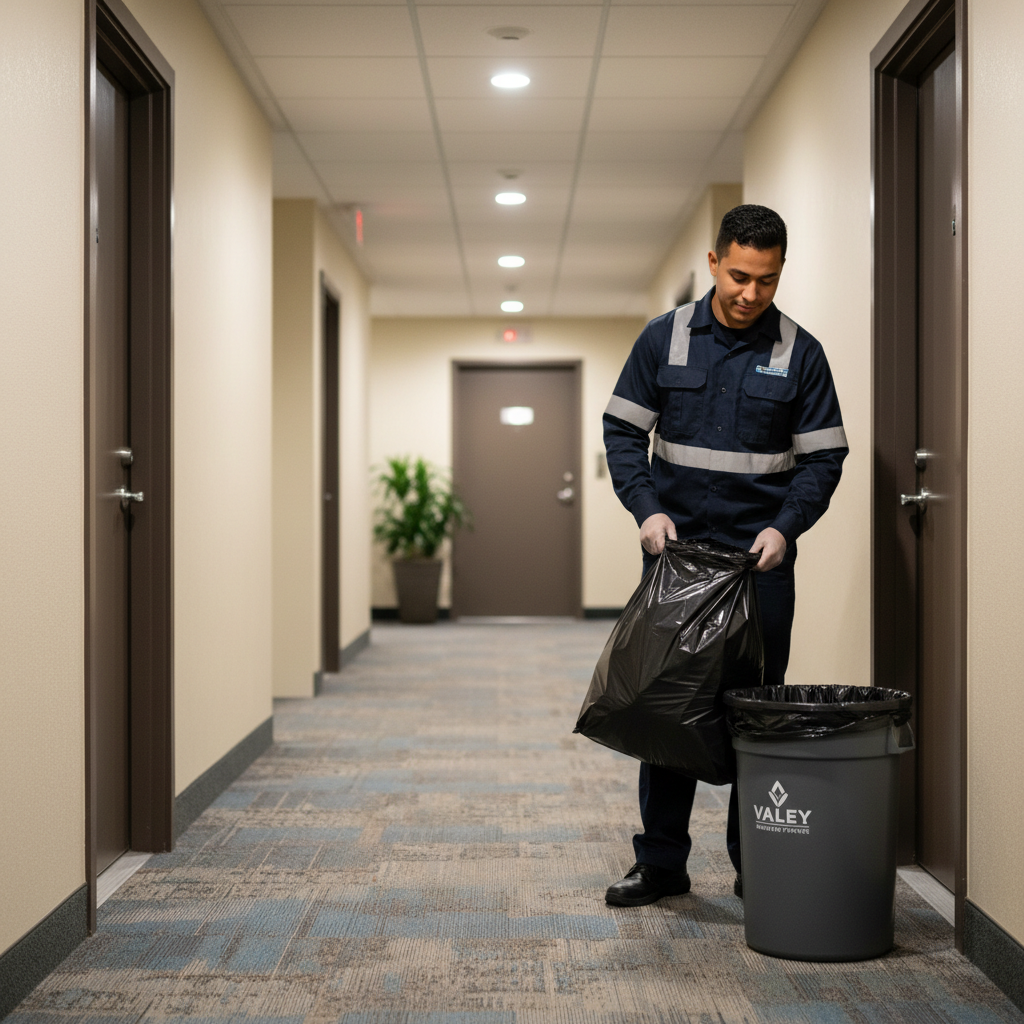
Valet Waste Service: A Property Manager's Operational Guide
A Texas operator's guide to valet waste service for property managers. Learn how to evaluate vendors, streamline implementation, and use valet trash to boost NOI and resident satisfaction.
'''## How Property Managers Can Master Valet Waste Service
Valet waste service for property managers is a high-impact, low-effort ancillary service that boosts Net Operating Income (NOI) while improving resident satisfaction and retention. For Texas operators, mastering vendor selection, contract negotiation, and implementation is key to transforming this amenity from a simple convenience into a powerful operational asset.
TL;DR:
- Valet waste is a profit center, generating $12-$22/door in monthly net income after vendor costs.
- The right vendor acts as an operational partner, reducing your team's workload and handling all resident-facing aspects of the service.
- A standardized implementation process, from resident onboarding to hauler communication, is critical for smooth, scalable operations across a portfolio.
Evaluating Valet Waste Vendors: An Operator's Framework
A valet waste vendor is more than a service provider; they are an extension of your property management team. Evaluating potential partners requires looking beyond the price per door to their operational capabilities, reliability, and how they integrate with your existing workflows to reduce, not increase, your team's burden.
Your ideal partner provides seamless service that feels like a natural part of your community's offerings. This means they handle resident communication, provide clean and consistent service, and give you actionable data—not headaches. The best valet trash companies function as an operational partner, not just a trash collector.
Key Vendor Evaluation Criteria
When comparing valet trash providers in competitive Texas markets like Austin or Dallas, use a standardized scorecard. Don't let a slick sales pitch distract from the operational realities. Here’s a framework to use:
| Criteria | What to Look For | Red Flags |
|---|---|---|
| Operational Reliability | Guaranteed pickup times, low missed-door rates (<0.1%), clear escalation procedures. | Vague service level agreements (SLAs), inconsistent pickup schedules. |
| Resident Onboarding | Provides all resident-facing materials (welcome letters, door hangers), clear container distribution process. | Expects your leasing team to explain the service and manage container logistics. |
| Technology & Reporting | Daily service reports with photo verification, digital tracking of missed pickups, dedicated client portal. | Manual reporting via email, no transparent data on service quality. |
| Insurance & Compliance | Provides proof of adequate liability and workers' comp insurance. W-2 employees, not 1099 contractors. | Reluctance to provide insurance certificates, use of independent contractors (a major liability risk). |
| Local Market Density | Strong presence in your specific submarket (e.g., North Dallas, Houston's Energy Corridor). | Limited local routes, stretching their team too thin across a wide geographic area. |
Calculating the True ROI
The financial benefit of valet trash extends beyond simple ancillary income. While the direct revenue is compelling, the operational savings and impact on retention provide significant value. A key part of your evaluation should be assessing the full impact on your NOI, a topic we explore further in our guide to Valet Trash Benefits That Directly Impact Your NOI.
A simple ROI calculation looks like this:
- Ancillary Fee: The monthly fee charged to residents (typically $20–$30).
- Vendor Cost: The per-door cost from the valet trash provider (our Texas-market rate is $8–$11 per door, per month).
- Net Income Per Door: (Ancillary Fee - Vendor Cost).
- Annual Net Income: (Net Income Per Door) x (Number of Occupied Units) x 12.
For a 300-unit property charging a $25 ancillary fee and paying an $9 vendor cost:
- Monthly Net Income: ($25 - $9) x 300 = $4,800
- Annual Net Income: $4,800 x 12 = $57,600
This calculation doesn't even factor in the "soft" ROI from improved resident satisfaction and higher retention rates, which we cover in How Valet Trash Improves Resident Satisfaction & Retention.
Streamlining Implementation Across Your Portfolio
Implementing valet waste service should be a turnkey process that requires minimal effort from your on-site teams. A professional valet waste partner manages the entire rollout, ensuring a smooth transition for residents and staff. This is a critical differentiator from discount providers who often leave the logistical heavy lifting to you.
Your vendor should provide a clear, documented implementation timeline. A standardized rollout process ensures consistency and predictability, whether you're launching at a single property in San Antonio or across a dozen assets in the Houston metro.
The 30-Day Implementation Timeline
A typical, well-managed implementation follows a structured 30-day plan:
- Week 1: Kickoff & Planning. Your corporate team and the vendor's operations lead meet to finalize the service agreement, define the schedule, and confirm the resident communication plan. The vendor should already understand your property's specific needs (e.g., layout of a garden-style community in Austin vs. a high-rise in Downtown Dallas).
- Week 2: Resident Notification. The vendor provides the official notices for your team to distribute to residents. This communication clearly explains the new amenity, the start date, service days/times, and rules (e.g., what can and cannot be placed out). Proper notification is key to resident buy-in and is a cornerstone of how to increase resident satisfaction with valet trash.
- Week 3: Container Distribution. The vendor’s team, not yours, should manage the distribution of branded trash containers to each unit. They should map the property and execute delivery with zero disruption to your leasing office.
- Week 4: Service Launch & First Week Support. Service begins. The vendor should have on-site supervision for the first few nights to ensure their service valets are adhering to the plan and to address any immediate issues. They should also provide you with daily reports from day one.
This structured approach is a core part of managing a successful amenities program, a major theme in our overview of Resident Experience & Amenities.
Day-to-Day Management: What Your Team Should (and Shouldn't) Be Doing
Once the service is live, your property management team’s involvement should be minimal. The goal of a valet waste service is to solve problems, not create them. Your vendor should be the first and only point of contact for all trash-related service issues.
Your team's role is oversight, not active management. They should be reviewing daily service reports and communicating with their dedicated account manager at the vendor, not fielding resident complaints about missed pickups.
H3: The Property Manager's Daily Checklist
- Review Daily Service Report (5 Mins): Check the report for completion rates, photo verification, and any notes on violations or issues. This is your single source of truth.
- Communicate with Vendor Account Manager (As Needed): Forward any resident feedback or concerns directly to your vendor contact. They are responsible for resolution.
- Monitor Community Cleanliness (Ongoing): Your maintenance team's time should be freed up from hauling trash from overflowing dumpsters. They can now focus on higher-value tasks. The valet service should keep compactor areas cleaner and more organized.
Your team should not be:
- Answering resident questions about pickup times or rules.
- Troubleshooting missed pickups.
- Managing the supply of trash containers.
- Cleaning up spills or leaks left by a sloppy service valet.
A professional valet waste partner handles all of this. This frees up your team to focus on leasing, resident relations, and other core property management duties, a key benefit outlined in our Valet Trash Benefits for Property Managers guide.
Frequently Asked Questions (FAQ)
How do we handle resident complaints about the service?
Your team should not handle them directly. All resident complaints or issues regarding valet trash service should be funneled through a dedicated channel to the vendor. Your partner should provide a clear process for this, whether it's a specific email address, phone number, or a portal. The vendor is responsible for investigating the issue (e.g., a missed pickup), communicating with the resident, and reporting the resolution back to you.
What is the typical contract length for valet waste service?
Standard contract terms in the Texas market are typically 36 to 60 months (3 to 5 years). While some vendors may offer shorter terms, a longer-term agreement often allows for more competitive pricing. Be sure to scrutinize the termination clauses, specifically the "termination for cause" language, to ensure you have an out if the vendor consistently fails to meet service level agreements (SLAs).
How is the service billed—by unit or by door?
Billing is almost always calculated on a "per door" or "per unit" per month basis. This means you are billed for every unit at the property, regardless of occupancy. This is a critical detail to factor into your budget. The monthly ancillary fee you charge residents (e.g., $25/month) is designed to cover this cost across all units and generate net income, even with vacancy loss.
Can we make valet trash optional for residents?
No, valet trash is a community-wide amenity that must be mandatory for all residents to be operationally and financially viable. Offering it as an optional service creates a logistical nightmare for service valets and eliminates the ability to run it as a predictable ancillary revenue stream. The service is added to the lease for all new residents and introduced to existing residents via a lease addendum upon renewal.
What happens if a resident doesn't follow the rules?
Your valet waste vendor should manage compliance. Their service valets should document and photograph violations (e.g., trash out too early, non-compliant bags, oversized items). The vendor then communicates these violations to your management team with clear documentation. You can then enforce lease violations as you would for any other community rule, typically with a notice and then a fine if the behavior continues.
How does valet trash impact my maintenance team's workload?
It significantly reduces it. Without valet service, maintenance staff often spend hours each day hauling trash from individual buildings to the community's dumpsters or compactors, a task known as "breaking down the dumpsters." Implementing a 5-night or 7-night valet service eliminates this burden, freeing up 10-15 hours of maintenance labor per week. This allows your maintenance supervisor to reallocate that time to preventative maintenance, work orders, and curb appeal projects. '''
Ready to upgrade your trash valet program?
Discuss your property-specific scope and quote with our team.
Related reading
Is Valet Trash an Amenity Residents Actually Want?
Valet trash service is a high-demand resident amenity that boosts property value and resident satisfaction. Learn how this service generates ancillary revenue and improves operational efficiency for Texas multifamily properties.
Top Valet Trash Benefits for Apartment Complexes in Texas
Valet trash benefits for apartment complexes include a significant NOI boost, improved resident retention, and cleaner properties. For Texas operators, this service is a direct path to higher asset value and market competitiveness.
How to Enhance Resident Experience with Apartment Amenities
Stop guessing what renters want. This guide provides an operator's framework for selecting amenities that enhance resident experience, boost NOI, and improve retention in Texas' competitive multifamily markets.