Top Valet Trash Benefits for Apartment Complexes in Texas
Valet trash benefits for apartment complexes include a significant NOI boost, improved resident retention, and cleaner properties. For Texas operators, this service is a direct path to higher asset value and market competitiveness.
''' The primary valet trash benefits for apartment complexes are a direct increase in Net Operating Income (NOI), enhanced resident satisfaction leading to higher retention rates, and a cleaner, more attractive property. Texas operators find it a low-risk, high-reward amenity that streamlines waste management and boosts asset value.
TL;DR:
- Valet trash is a revenue-generating amenity, adding $12–$22 per unit in monthly profit after costs.
- The service consistently ranks as a top-demanded amenity, directly improving resident satisfaction and retention.
- It eliminates overflowing dumpsters, reduces pests, and keeps property maintenance costs down, contributing to a cleaner community.
Ancillary Revenue & NOI Growth
This is the most direct financial benefit of implementing a valet trash program. It’s not just a resident convenience; it’s a reliable revenue stream that flows directly to your Net Operating Income (NOI). By partnering with a vendor and charging a standard monthly fee, properties generate predictable, high-margin income.
In the competitive Texas multifamily market, especially in metros like Austin and Dallas, every dollar of NOI is critical as it directly influences property valuation. A well-executed valet trash program can add tens or even hundreds of thousands of dollars to your property's value upon disposition. This is achieved by taking the incremental annual NOI and applying the market's cap rate.
For example, a 300-unit property charging residents $30/month for valet trash while paying a vendor $8–$11 per door generates a net profit of $19–$22 per unit monthly. This translates to $68,400–$79,200 in pure annual NOI lift, which, at a 5% cap rate, increases the property's valuation by $1.37M to $1.58M. You can read more about the financial mechanics in our guide to the true cost of valet trash service.
Valet Trash Revenue vs. Other Ancillary Fees
Not all ancillary income is created equal. Compared to other common fees like pet rent or reserved parking, valet trash has a near-100% adoption rate in properties where it's a mandatory service. This universality makes it a uniquely stable and predictable income source.
| Ancillary Service | Typical Monthly Fee (to Resident) | Typical Net Profit (Per Participating Unit) | Adoption Rate | Annual NOI Impact (300-Unit Asset) |
|---|---|---|---|---|
| Valet Trash | $25–$35 | $15–$25 | ~100% (Mandatory) | $54,000–$90,000 |
| Reserved Parking | $50–$100 | $45–$95 | 10–30% | $16,200–$85,500 |
| Pet Rent | $20–$40 | $20–$40 | 40–60% (e.g., Houston) | $9,600–$28,800 |
| Storage Units | $40–$80 | $35–$75 | 5–15% | $2,100–$13,500 |
As the table shows, valet trash provides one of the most significant and reliable NOI boosts available. This is a key reason it’s become a standard offering in new Class A developments and a popular retrofit for Class B and C assets seeking a competitive edge. Explore more ways these benefits impact your bottom line in our article on valet trash benefits that directly impact your NOI.
Enhanced Resident Experience & Retention
Valet trash service directly improves daily life for residents, making it a powerful tool for satisfaction and retention. This amenity eliminates the chore of carrying heavy, dripping trash bags across the property to a distant dumpster, a significant pain point especially in large, garden-style communities in Houston or San Antonio during the summer heat.
This convenience is a tangible, daily-use benefit. Unlike a pool or fitness center that only some residents use, valet trash serves everyone. It’s consistently ranked among the best apartment amenities for residents because it gives back time and removes a common hassle. Happier residents are more likely to renew their leases, reducing turnover costs related to marketing, make-ready, and vacancy loss.
A 5% increase in resident retention can boost profitability by 25% to 95%. While valet trash isn't the only factor, it is a major contributor to the overall positive living experience that convinces residents to stay. For a deeper dive into this topic, see our post on how valet trash improves resident satisfaction and retention.
Cleaner Property & Improved Aesthetics
A clean property is fundamental to attracting and retaining high-quality residents. Valet trash services impose a structured, professional system for waste collection that dramatically improves community cleanliness and curb appeal.
Without a managed service, dumpster areas inevitably become unsightly and unsanitary. Overflowing bins, discarded furniture, and loose trash create eyesores, attract pests, and generate foul odors. This negatively impacts leasing tours and resident morale. Your maintenance team is forced to spend valuable time cleaning up these areas instead of focusing on work orders and preventative maintenance.
The "Clean Tour Path" Framework
Every leasing agent knows the importance of the "tour path"—the route shown to prospective residents. Valet trash ensures the entire property, not just a curated path, remains consistently clean.
- Eliminates Dumpster Blight: The central dumpster area is no longer a public dumping ground. Waste is contained at individual units until collection.
- Reduces "Trash Dragging": Dripping garbage bags are no longer dragged through breezeways and down stairwells, preventing stains and lingering smells.
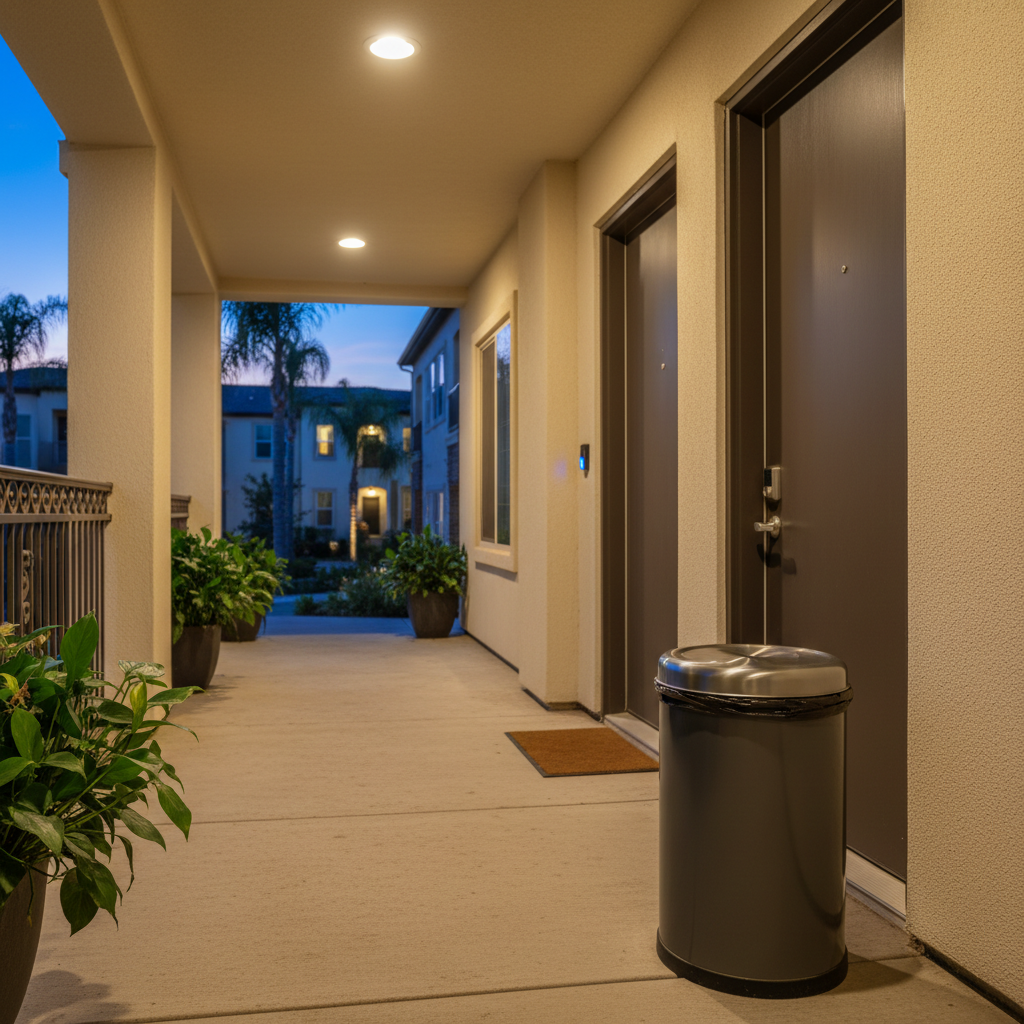
- Standardizes Appearance: Uniform trash receptacles provided to each resident create a neat, orderly appearance at every door during collection hours.
This system frees up your maintenance staff to focus on higher-value tasks, reducing overtime and improving operational efficiency. It directly supports the property manager by removing a significant operational headache. Our guide for property managers explores these operational wins in more detail.
Increased Safety and Security
Reducing late-night trips to the dumpster is a significant safety benefit. Valet trash service eliminates the need for residents—particularly single residents or those with children—to walk alone across a dark parking lot to dispose of their trash, mitigating potential security risks.
This is a major selling point for residents who prioritize personal safety. In sprawling suburban communities around Dallas-Fort Worth or Austin, where dumpsters can be several hundred yards away from an apartment, this service provides genuine peace of mind.
Furthermore, cleaner common areas are inherently safer. Well-lit, debris-free breezeways and pathways reduce the risk of trips and falls. By preventing trash buildup, the service also discourages pests like rodents and raccoons, which can pose health and safety hazards. A clean, well-maintained property is perceived as a safer, more cared-for community.
This focus on resident well-being is a core component of building a strong community and is an essential part of the broader topic of Resident Experience & Amenities.
Frequently Asked Questions
How much does valet trash service cost an apartment complex?
For the property, the direct vendor cost for valet trash service in Texas typically ranges from $8 to $11 per door, per month. The property then charges residents a mandatory fee of $25 to $35 per month, creating a net positive income stream for the asset.
Is valet trash a mandatory fee for residents?
Yes, for the program to be financially and operationally successful, it is implemented as a mandatory fee for all residents. This ensures 100% participation, maximizing revenue, and guaranteeing community-wide cleanliness standards. The fee is added to the lease as a standard monthly charge.
What kind of properties benefit most from valet trash?
While Class A new developments often include valet trash as a standard amenity, Class B and C properties often see the biggest ROI. For these assets, adding a premium, in-demand service allows them to compete with newer products, justify rent increases, and significantly boost NOI and property value without a major capital expenditure.
How does valet trash collection work?
Residents place their tied trash bags into a provided, lidded container outside their door during a specific service window (e.g., 6:00 PM to 8:00 PM), Sunday through Thursday. Service porters from the valet company then collect the bags and transport them to the on-site dumpster or compactor, ensuring the community is clean before the next morning.
Won't residents complain about the extra fee?
Initial pushback is rare and typically minimal, especially when the benefit is clearly communicated. Most residents quickly embrace the convenience and appreciate the cleaner living environment. The key is a professional rollout and a reliable service provider. When presented as part of a premium living experience, it is viewed as a valuable amenity, not just a fee.
Does valet trash really help with pest control?
Yes, significantly. By removing the food source—overflowing dumpsters and trash left out overnight—valet trash makes the property far less attractive to pests like rodents, raccoons, and insects. A structured, five-night-a-week collection schedule means less waste sitting for long periods, directly supporting your pest control efforts and reducing associated costs. '''
Ready to upgrade your trash valet program?
Discuss your property-specific scope and quote with our team.
Related reading
Is Valet Trash an Amenity Residents Actually Want?
Valet trash service is a high-demand resident amenity that boosts property value and resident satisfaction. Learn how this service generates ancillary revenue and improves operational efficiency for Texas multifamily properties.
Valet Waste Service: A Property Manager's Operational Guide
A Texas operator's guide to valet waste service for property managers. Learn how to evaluate vendors, streamline implementation, and use valet trash to boost NOI and resident satisfaction.
How to Enhance Resident Experience with Apartment Amenities
Stop guessing what renters want. This guide provides an operator's framework for selecting amenities that enhance resident experience, boost NOI, and improve retention in Texas' competitive multifamily markets.